QuietQuotient · Fan Adaptation

Dev Log

A build diary. Every major decision, every playtest discovery, every rule that didn't survive contact with the table.

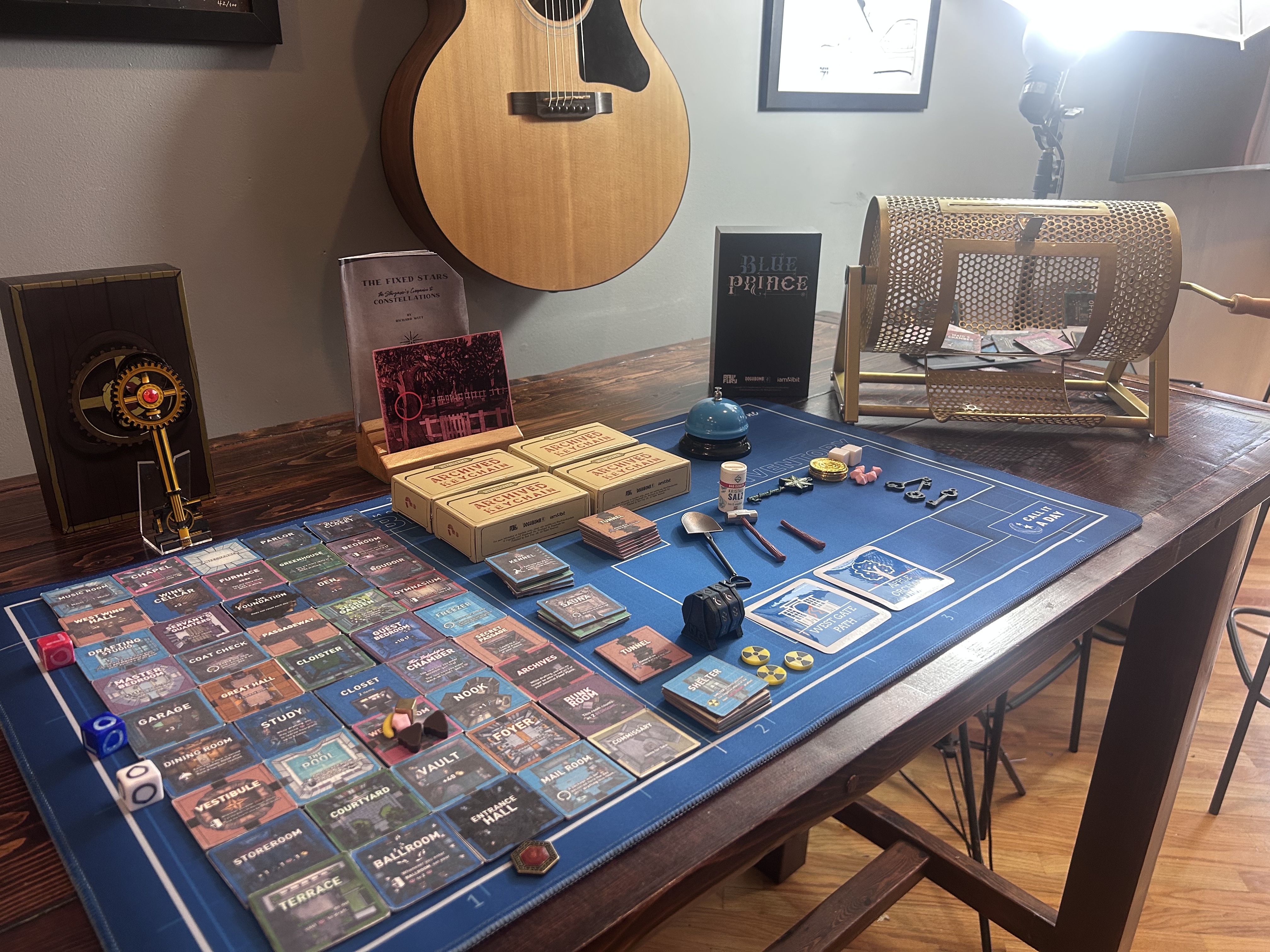
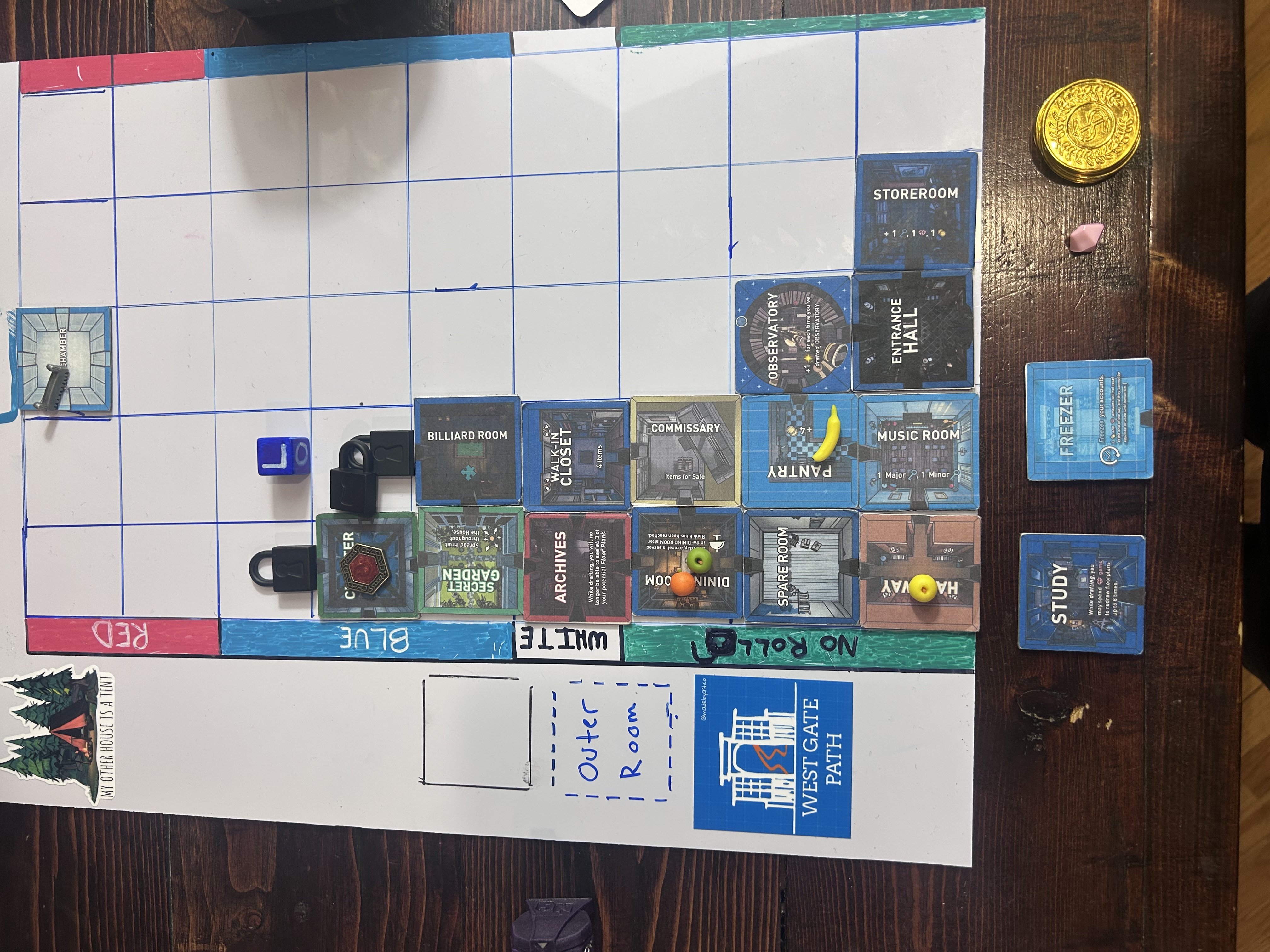
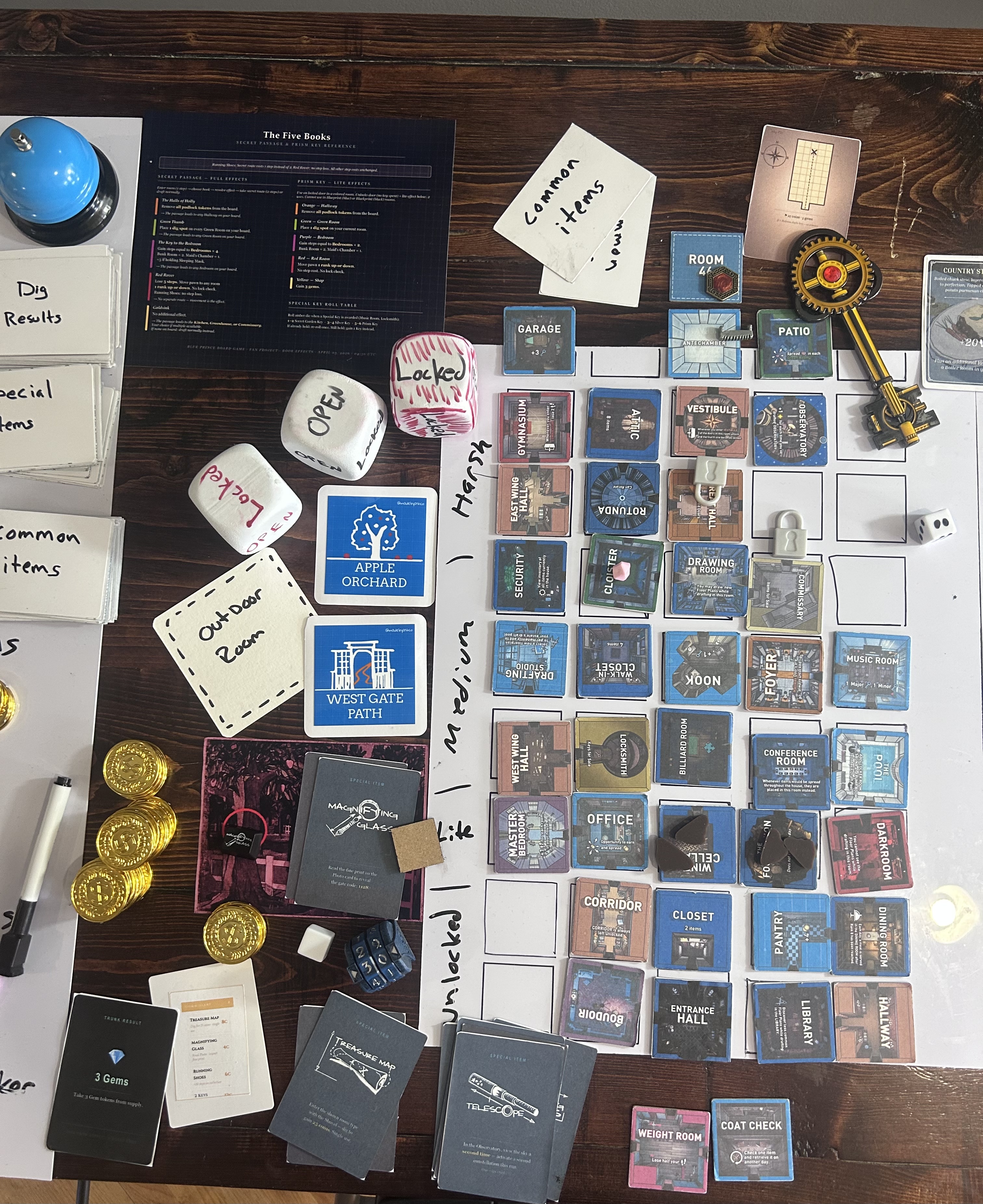
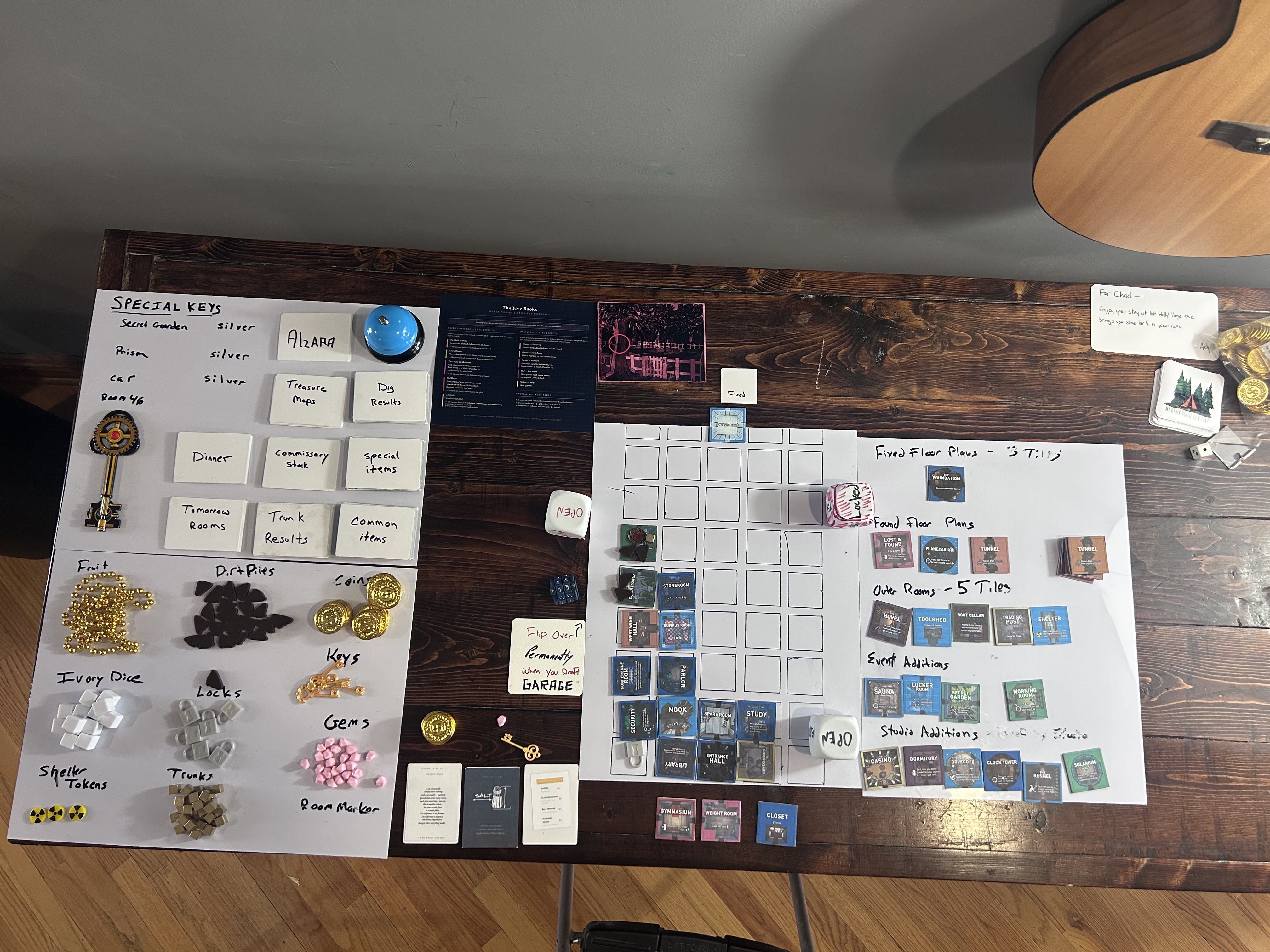
End state of the May 14 solo run — path built to Cloister, triple locked, Antechamber just out of reach
Triple Locked

A solo run that made it deep into the Blue rank before the house won. What the Fixed Stars booklet fixed, what the Commissary didn't, and two overlapping locks that ended everything.

Read post →
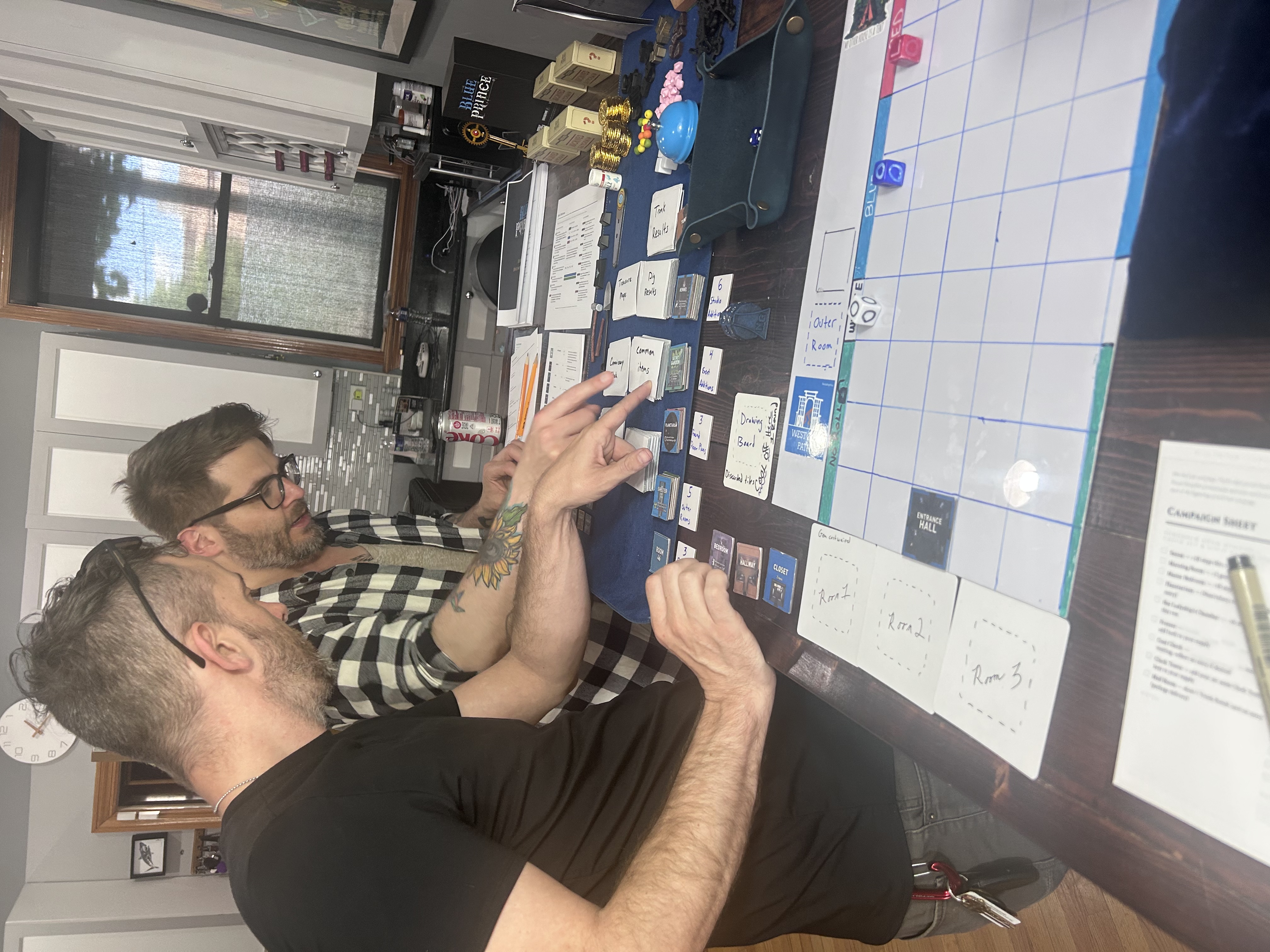
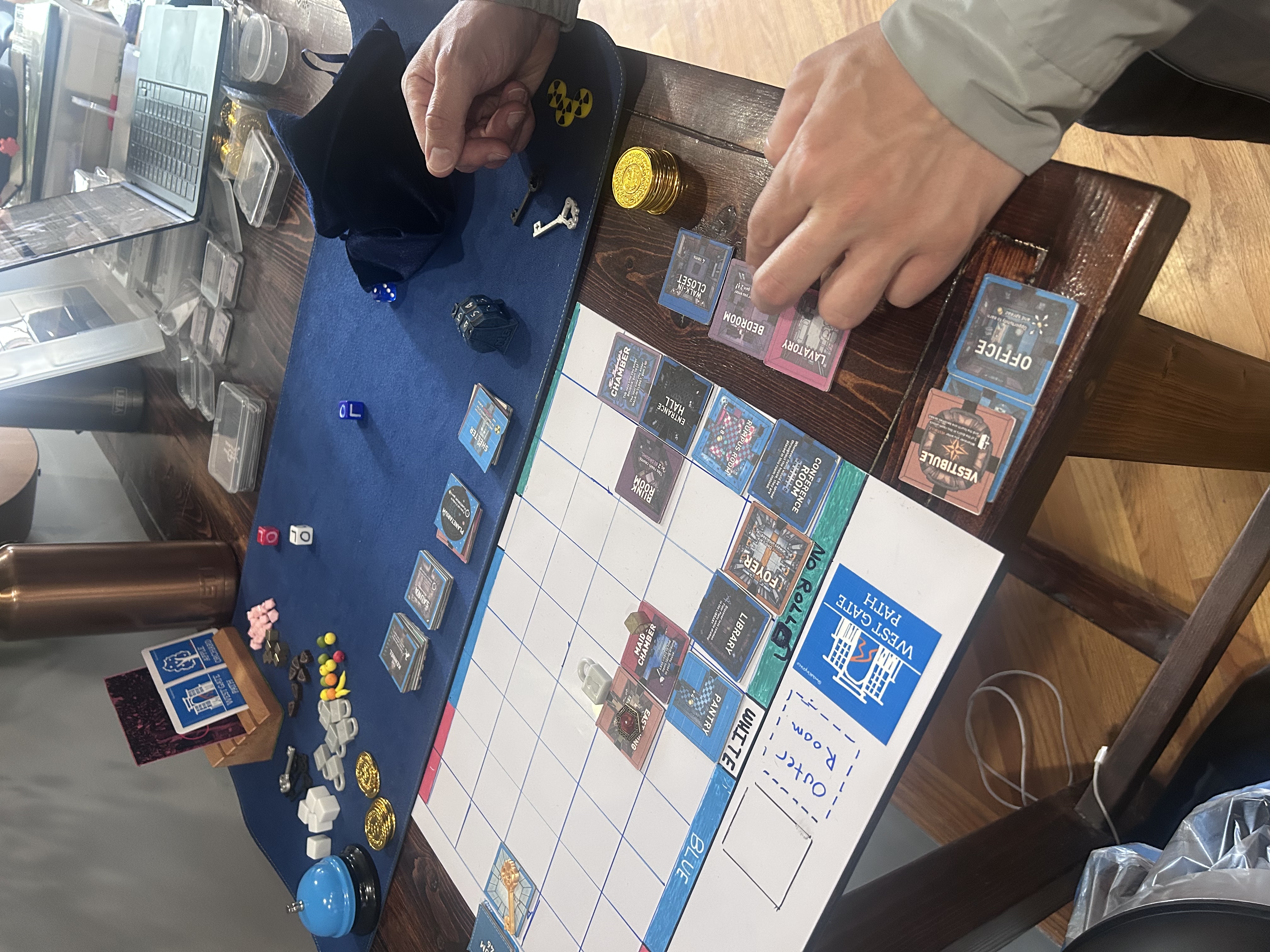
Overhead shot of Mike placing room tiles during the May 9 playtest session
Mike Brings Coffee

A surprise Saturday drop-in. A friend who has never touched the video game. Forty minutes later, he wins. And somewhere in between, he says things that only a completely fresh set of eyes could say.

Read post →
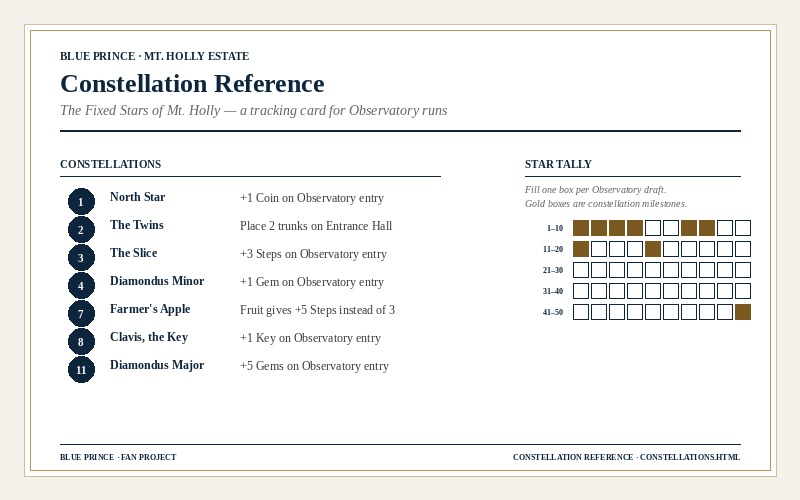
The previous constellation reference card design with nine milestones and 50-box tally grid
The Constellation Problem

Nine constellations, a 50-box tally grid, a permanent campaign resource that accumulates across every run. All of it gone. What's left is a six-row reference card and a single d6 roll. The question was whether to be faithful or whether to be playable, and I put off answering it for weeks before realizing it was the same question.

Read post →
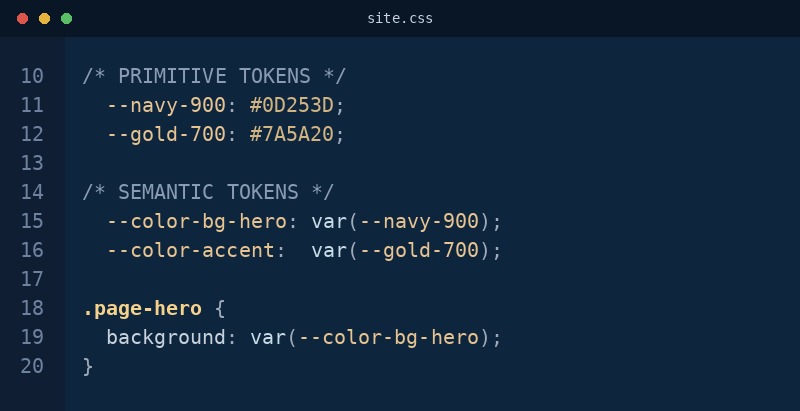
A screenshot of the site.css design tokens section
The Housekeeping Post

A three-phase CSS cleanup across twenty-five files. The codebase got bigger. The site got easier to change. Those two things are not a contradiction — and it took doing the work to stop confusing one for the other.

Read post →
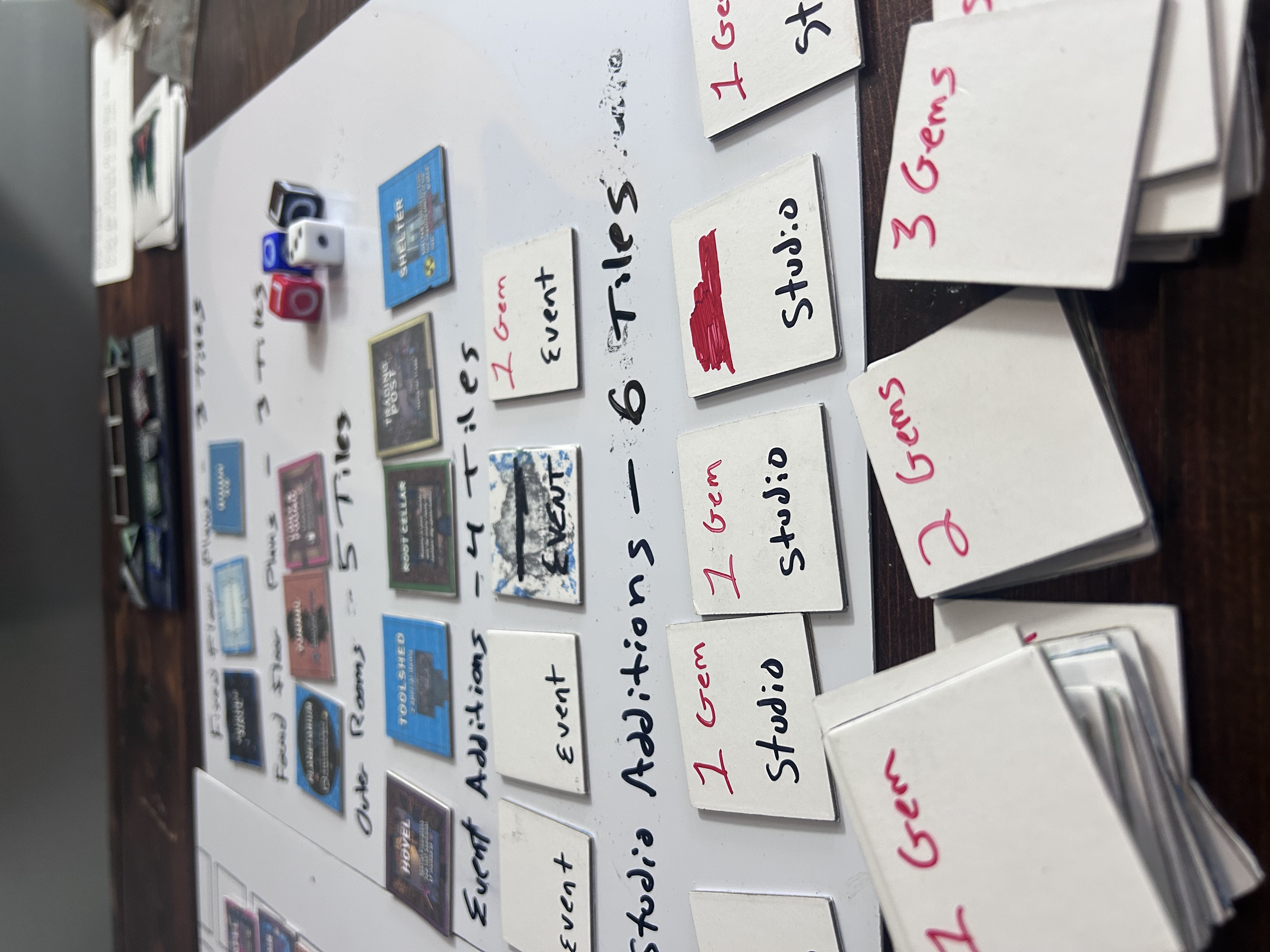
Prototype tile backs with scribbled-out old values and new costs written over in red Sharpie
Seven Tiles, One Sharpie

An audit against the video game's authoritative source found six room tiles with the wrong gem cost on the back. One more was over-priced in the opposite direction. The prototype handled it the way paper prototypes are supposed to — a marker, a scribble, done.

Read post →
The final board state from Campaign 4 Day 1 — Room 46 reached
The Slow Win

Campaign 4, Day 1 — complete. The first Day 1 win across four campaigns, reached the long way around: thirty-five rooms placed, a near dead-end pulled apart by a single draft, and a streak of favorable draws at the top of the mansion.

Read post →
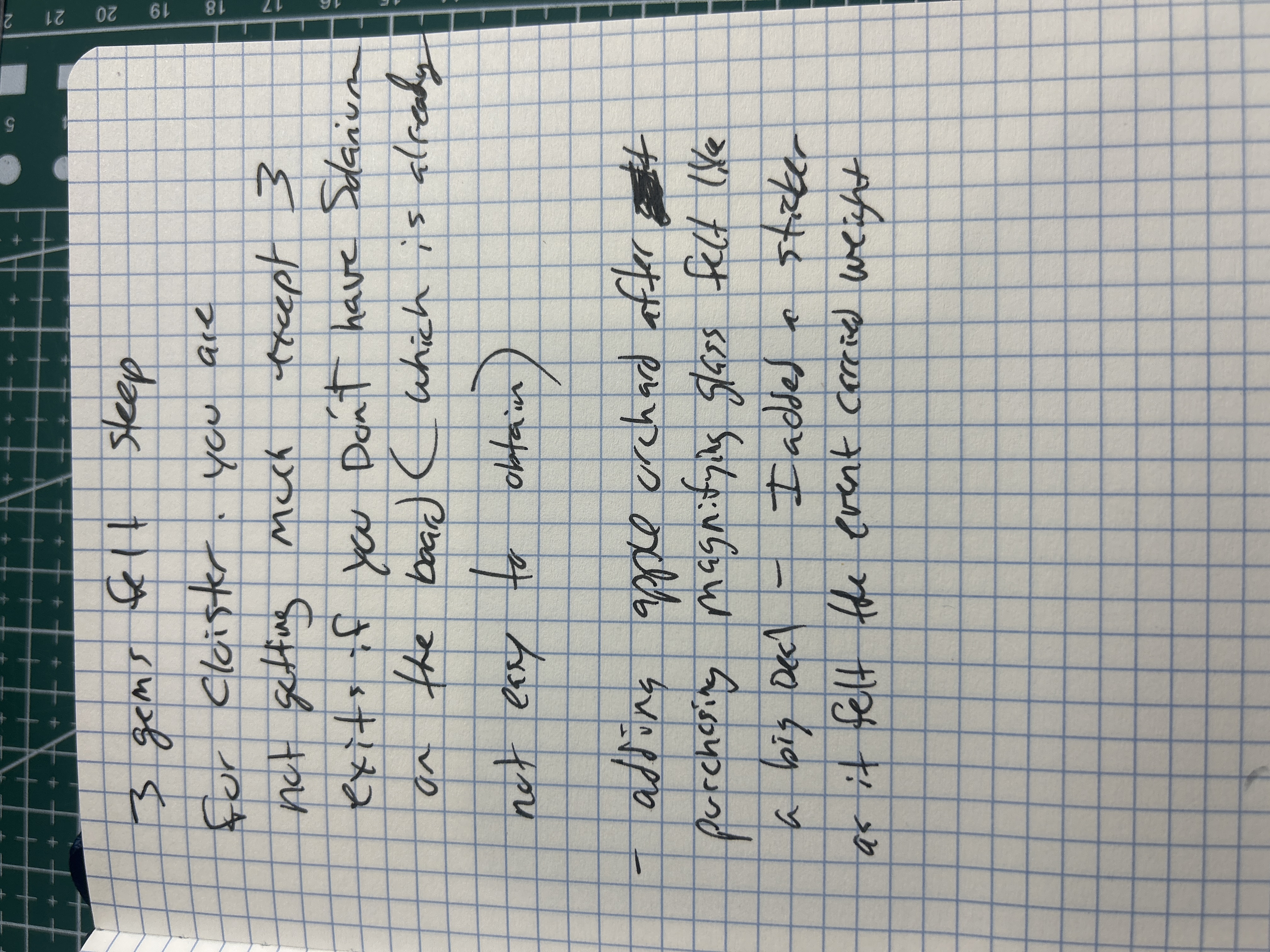
Handwritten playtest notes from Campaign 4 Day 1
The Notes Don't Lie

Campaign 4, Day 1. Still no gems at 45 minutes. A Music Room roll that felt brutal in red ink. And the moment the Apple Orchard unlocked, and nothing at the table was ready for it.

Read post →
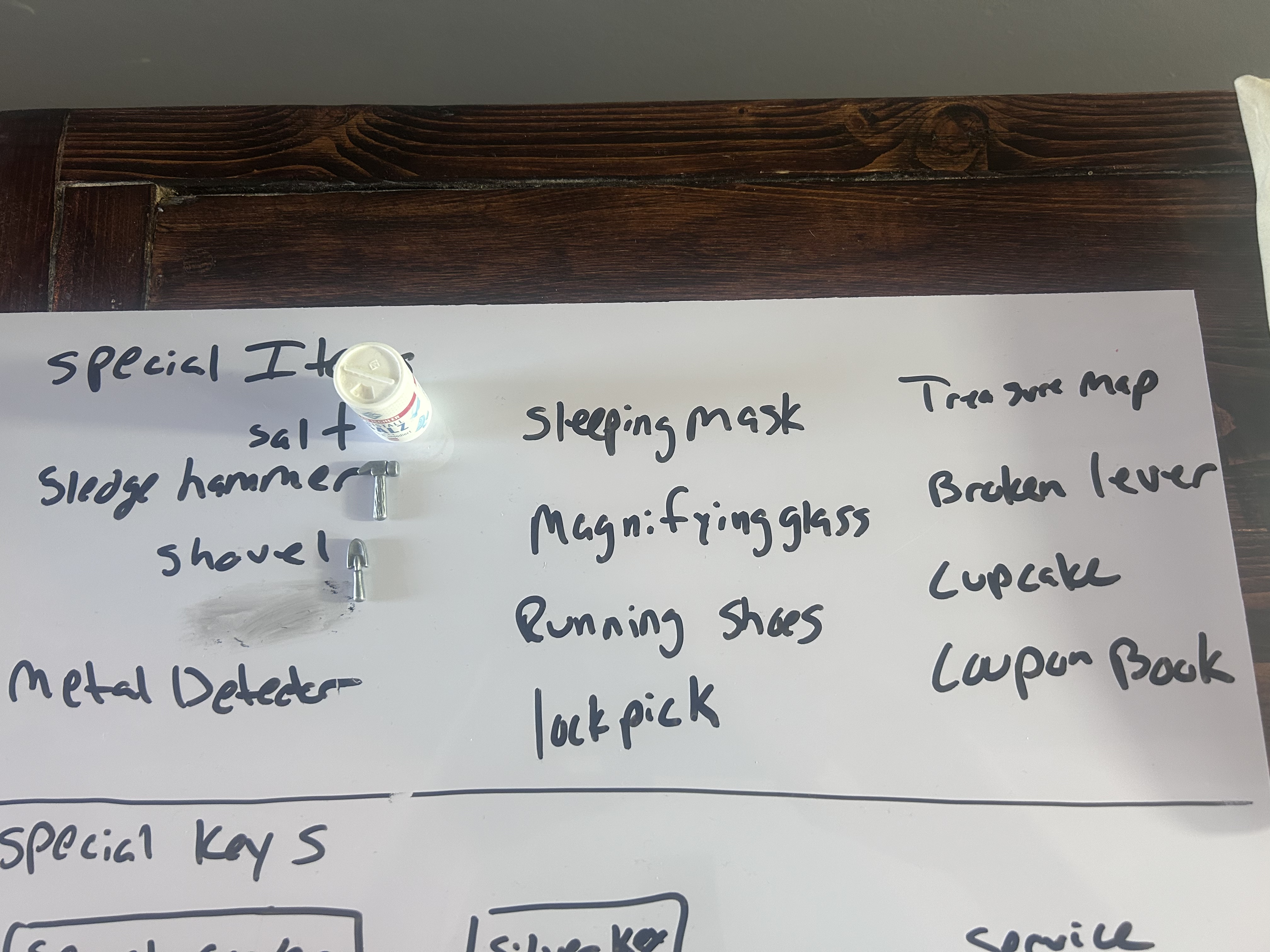
The full prototype table mid-playtest during Campaign 1 Run 3
The Table Problem

Campaign 1, Run 3 mid-session. The prototype works. The table doesn't. Plus: starting coins confirmed, Secret Passage contrast failure, and treasure maps drawn upside down.

Read post →
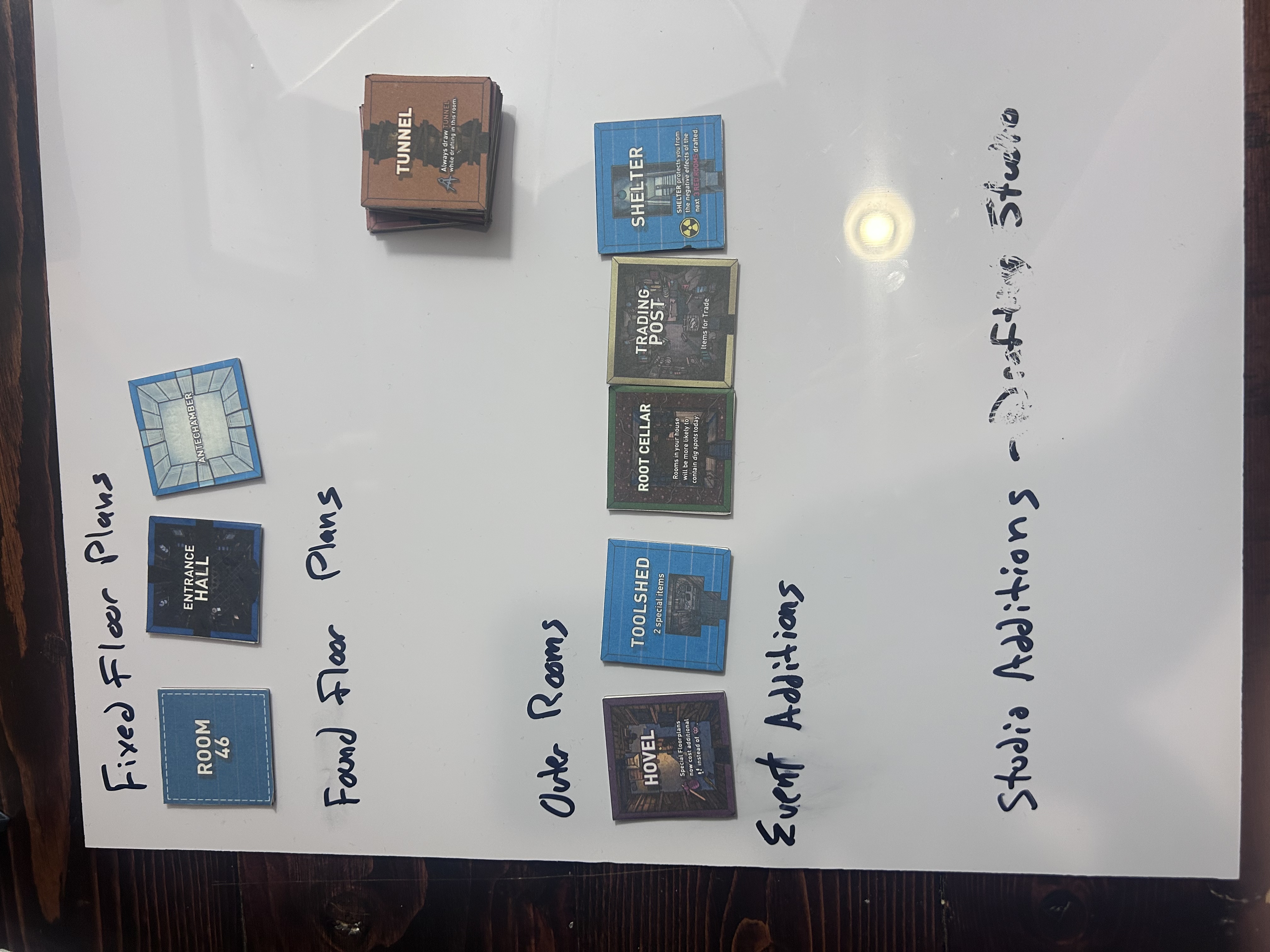
The final board state from Campaign 1 Run 2 — eight rooms placed, no gems collected
The Gem Desert

Campaign 1, Run 2. Eight rooms placed, 42 steps remaining, 0 gems from start to finish. Steps aren't the problem. The gem economy is.

Read post →
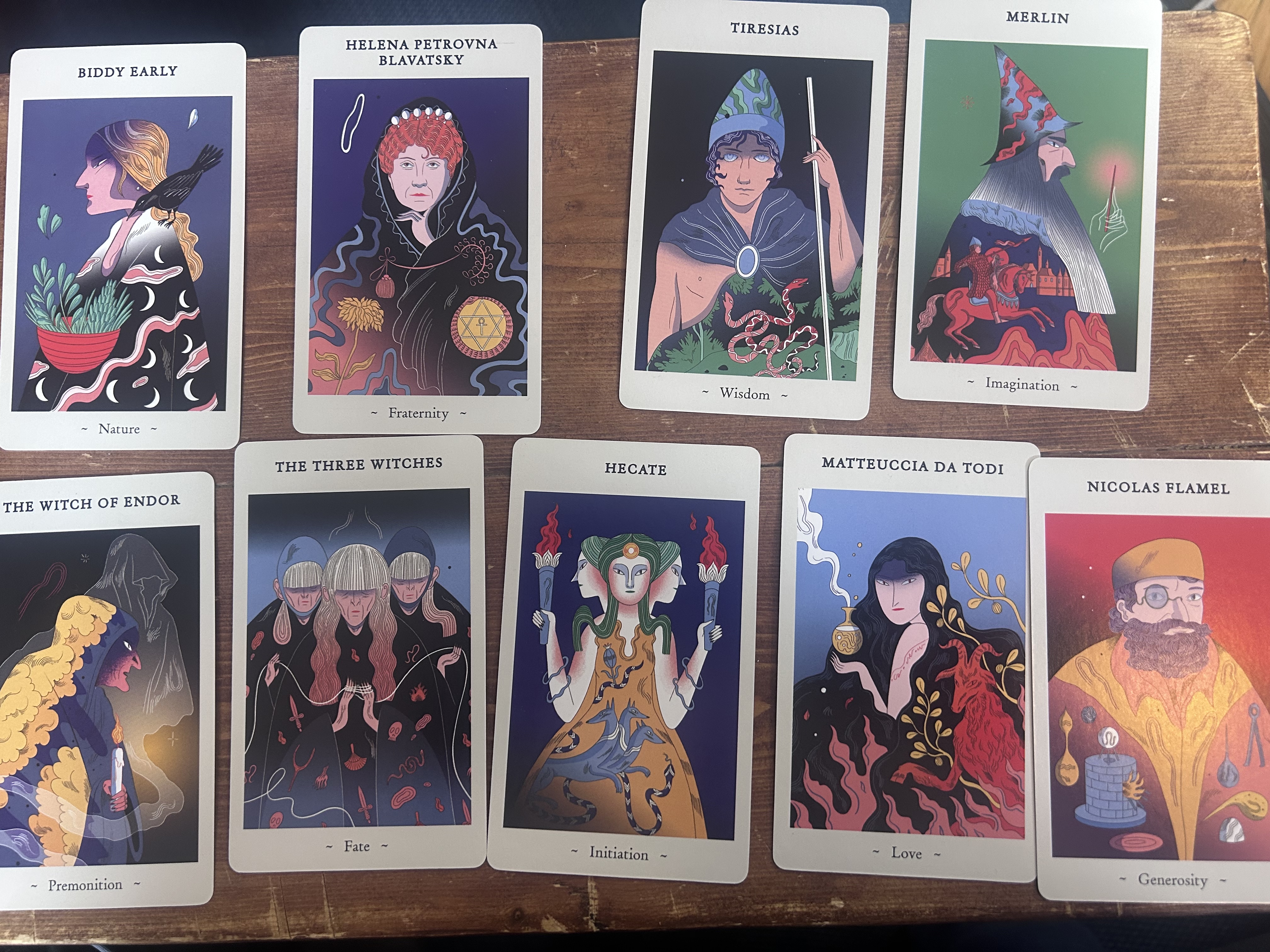
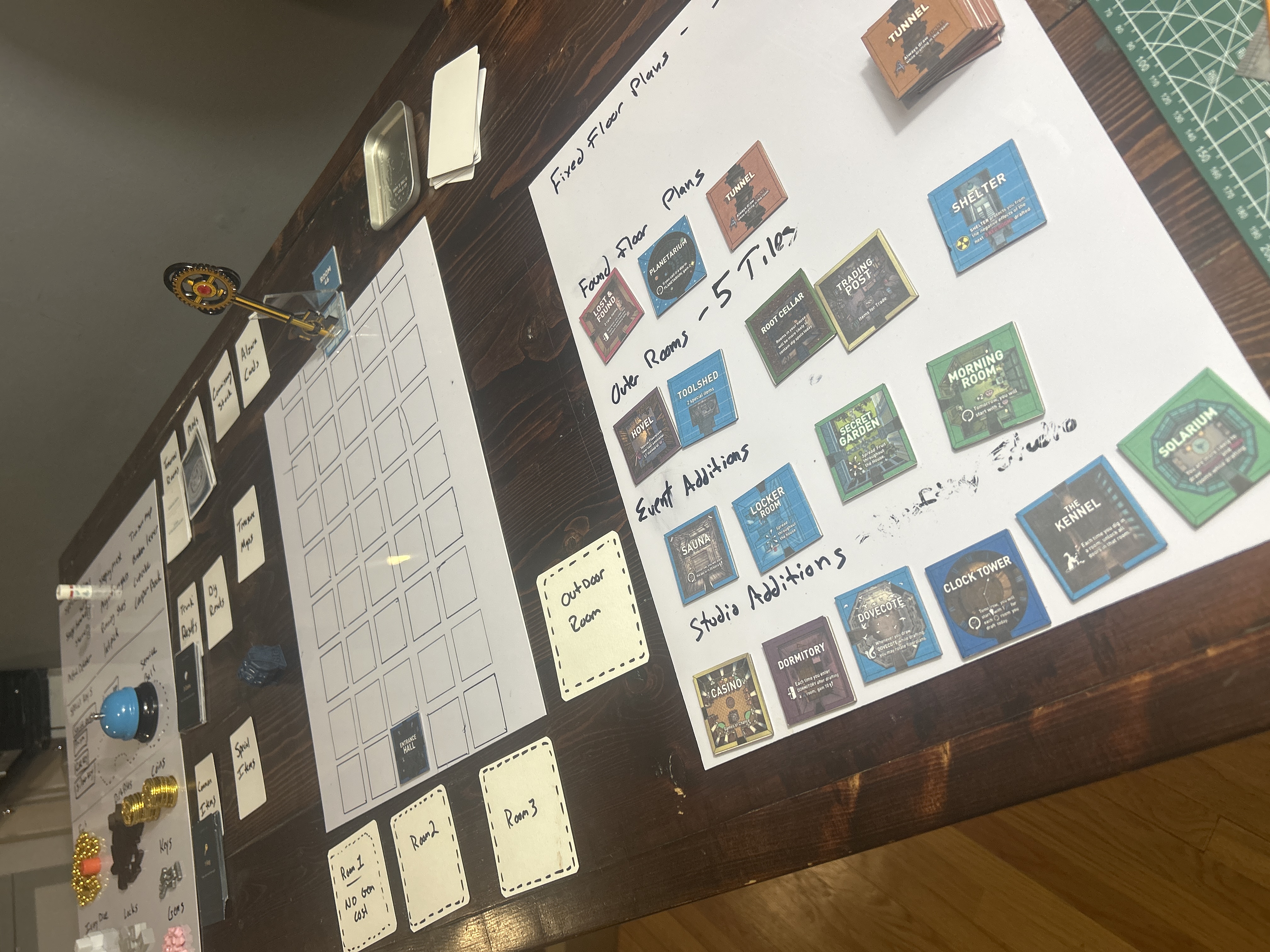
The prototype table during Campaign 1 Run 1 — first playtest
Day One

Campaign 1, Run 1. Fifty steps, forty-three coins, and nowhere to go. The Vault at Rank 2 broke the economy in four turns and told us something important about flat probability pools.

Read post →
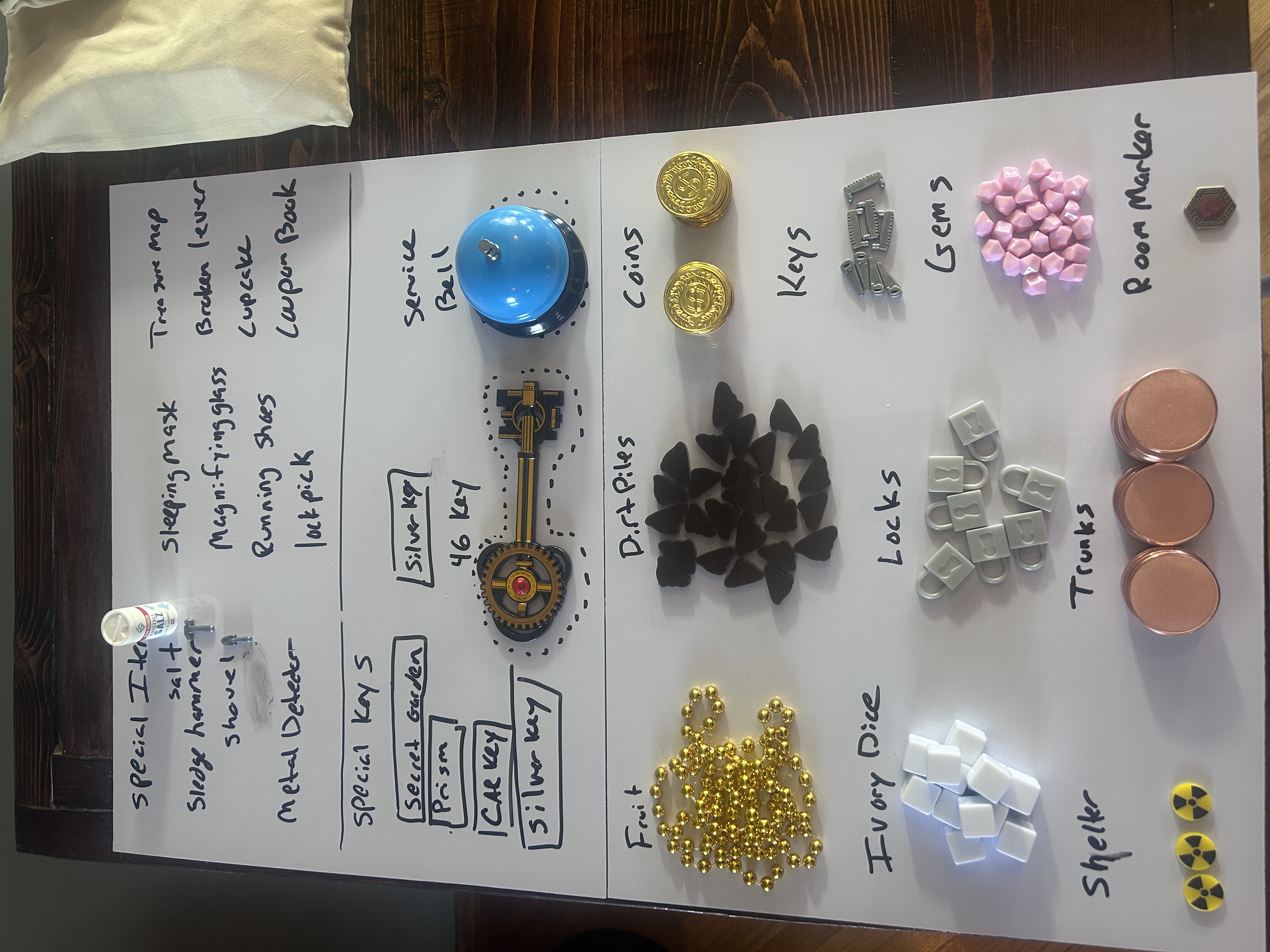
Prototype tile backs with gem costs and category letters
The Audit

Twelve errors in a rules doc that felt finished. How they got there, why they survived, and what it took to find them — including apostrophes that broke the room counter and a mechanic attributed to the wrong room.

Read post →
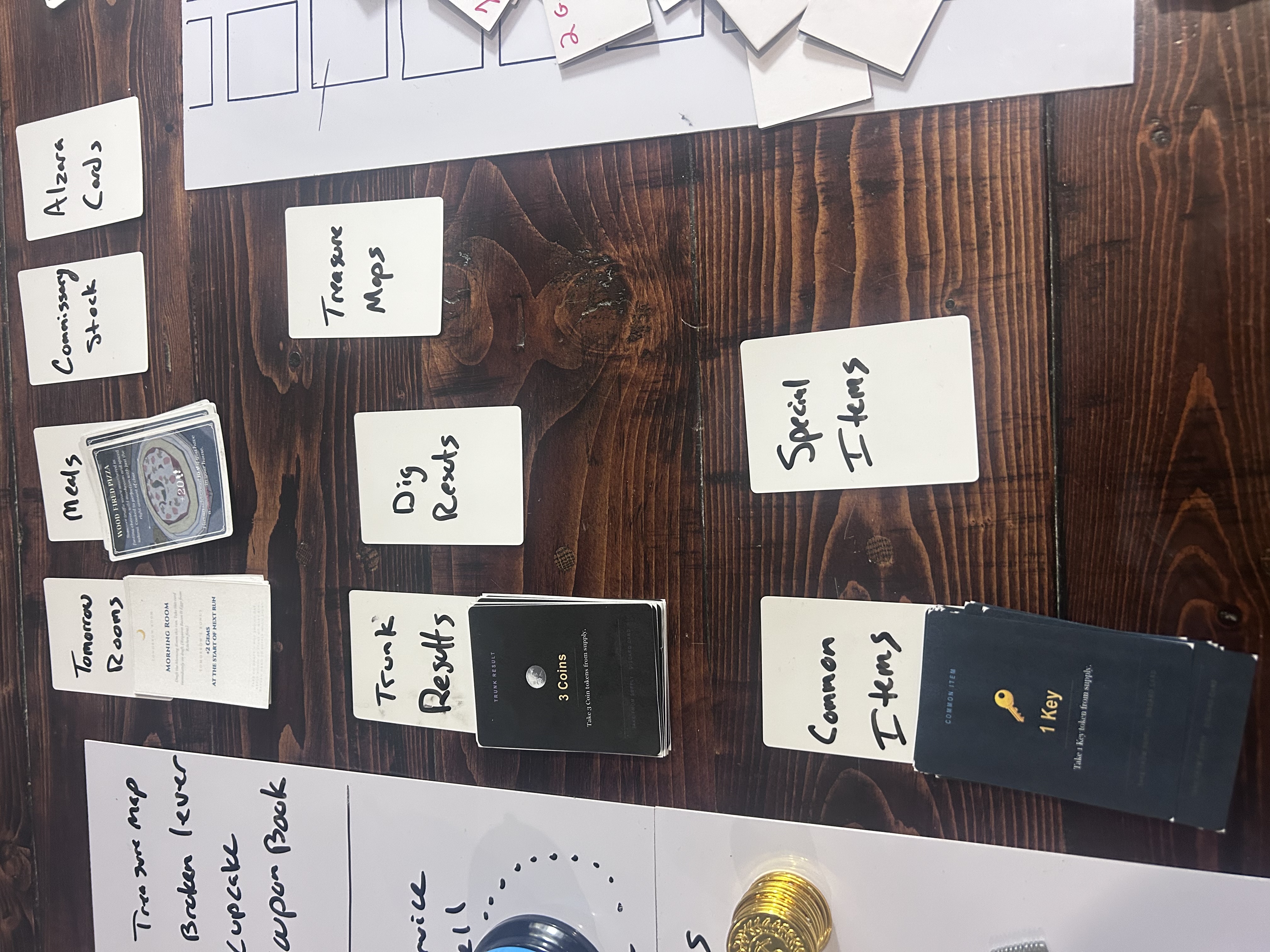
Card decks laid out on the prototype table
What the Game Actually Does

A session of looking things up, getting things wrong, and making cleaner decisions because of it. The fruit system, the Showroom question, the Telescope, and why the card is the item.

Read post →
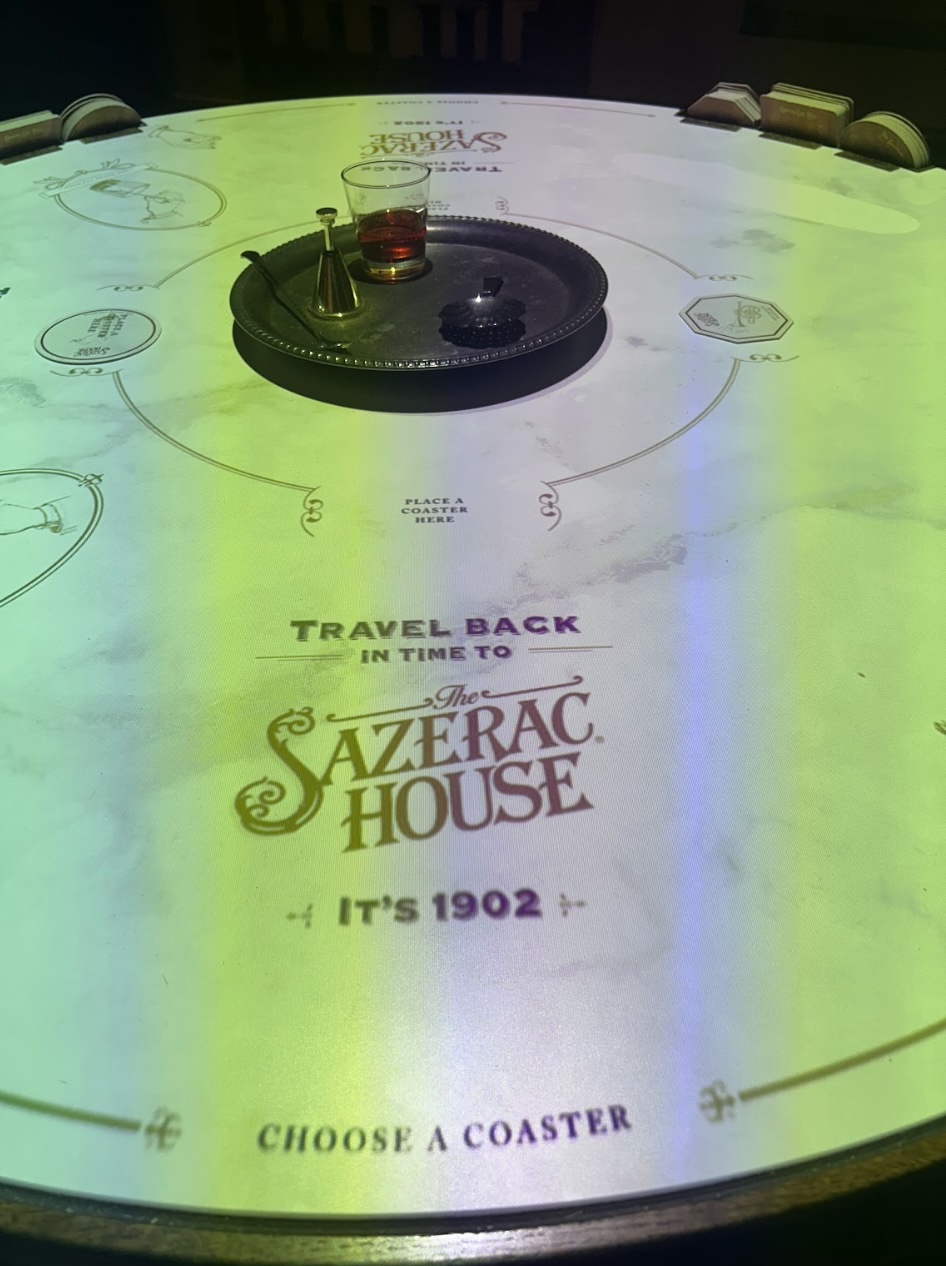
The Sazerac House bar in New Orleans
The House That Already Exists

A week off, a trip to New Orleans, and an accidental visit to the Sazerac House — a building organized exactly like Mt. Holly Estate, down to the draft mechanic.

Read post →
Item tokens laid out on the prototype mat
Behind the Build

On being eight years old, writing to Nintendo, and why this is technically game number two. The origin story of the adaptation and why it needed this many documents.

Read post →
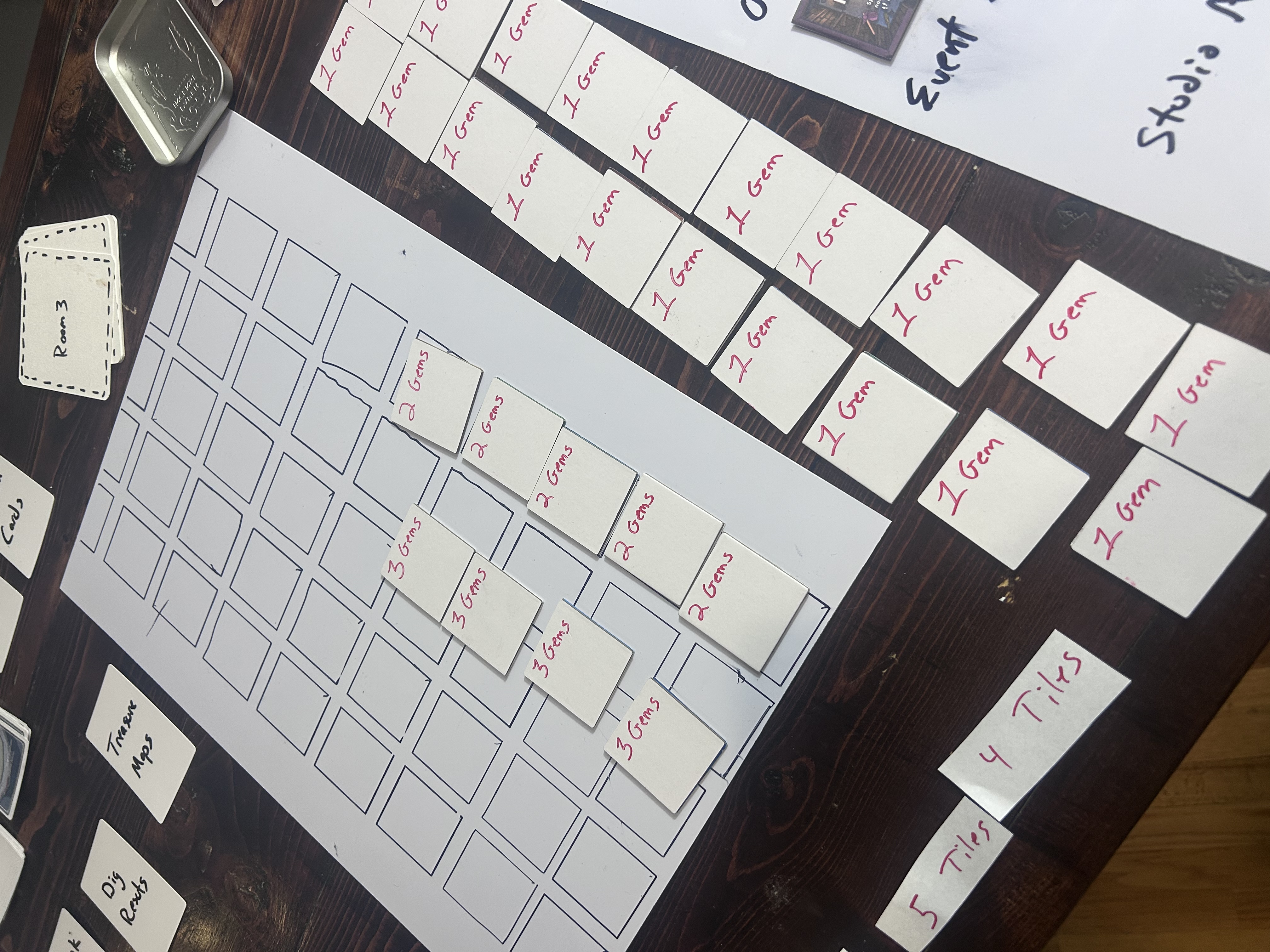
Tiles sorted by gem cost on the prototype board
The System Underneath

Rarity is gone. The bag is the only deck. Movement is declared, not tracked step by step. A full design session rebuilt core assumptions — and produced the Room Glossary, a reference card system, and a much cleaner rules document.

Read post →
Prototype board with tiles and token mat
The Table Fights Back

First playtest session. The active deck was a precarious stack. The tiles were too small. The pawn moved step by step and the overhead was real. Everything that broke, and what we built to replace it.

Read post →
Full prototype token mat
Engineering the Estate

The mathematical bones of the adaptation — the step economy, the Slot 1 reprieve, conditional drafting, the lock dice system. The first articulation of what this project is trying to be.

Read post →