The day after Mike's run I sat down alone and played it myself. No observer, no notes taken mid-game — just a full solo run to see where I actually ended up.
I didn't win.
The Fixed Stars worked
The first real test of the constellation booklet in a solo context. It worked. Having a physical reference at the table — something to flip open rather than a tab to switch to — made the Observatory feel like a room worth visiting rather than a rules interruption.
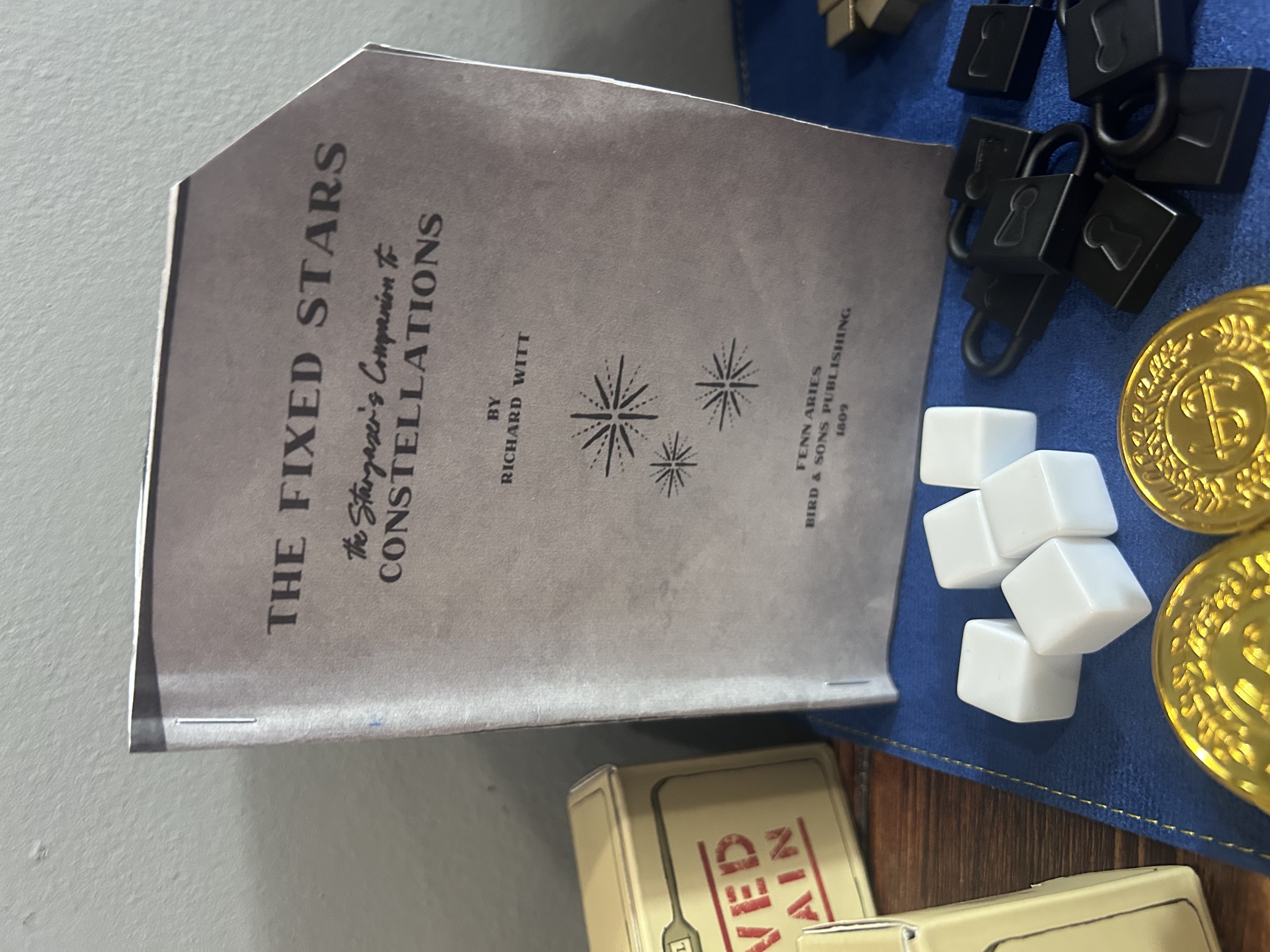
The booklet's design also holds up as an artifact. It belongs in the world of the game. That matters more than it sounds — components that feel like they were made for something else break immersion in a way that's hard to ignore once you notice it.
The keys
The Secret Garden key, used with the physical token, felt meaningful in a way it hadn't before. Holding something to place on the board — rather than flipping a card state — makes the moment register differently.
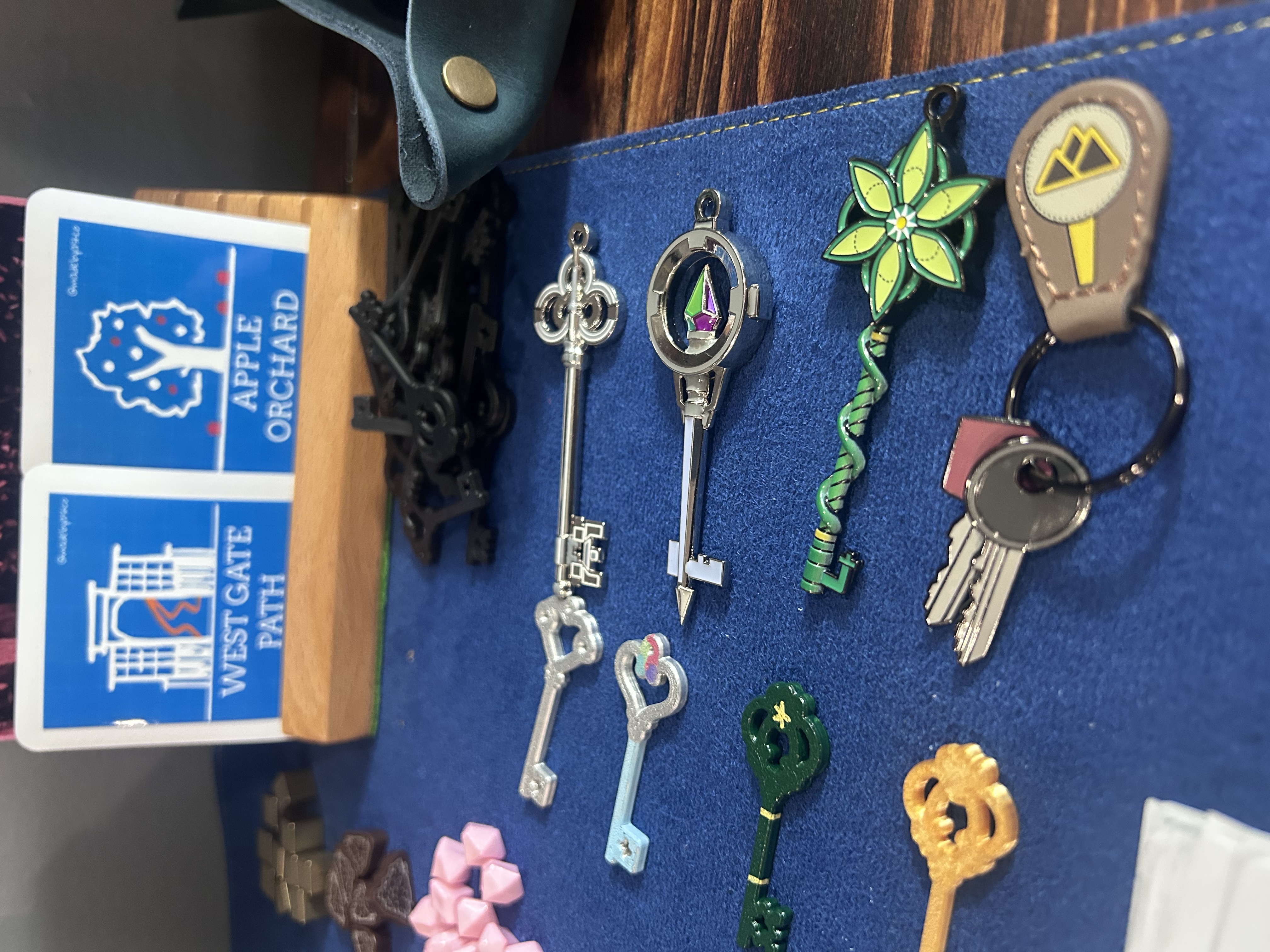
The keys are sourced from iam8bit — a shop that sells collectible gaming merchandise, and as it turns out, an unexpectedly good source for decorative physical keys that actually look like they belong in a manor house mystery. The key collection as a physical set is one of the stronger design decisions in the prototype. Every key looks different. You know at a glance which one you're holding. That kind of immediate legibility is hard to achieve with cards alone.
The Commissary didn't matter
I landed in the Commissary and couldn't afford anything. The Magnifying Glass was for sale. I looked at it and moved on — I didn't need more steps. There wasn't enough pressure on the step economy to make a step-granting item feel worth buying.
This is a balance note I'm sitting with rather than acting on. One run doesn't tell you much about economy. But it's worth watching across future sessions — if the Commissary consistently fails to create a decision point, that's a real problem. The shop should feel like a tradeoff, not a display case.
The Billiard Room, first encounter
I'd never actually played through the Billiard Room before this run. Two things came up immediately. First: there's no rules entry covering what happens if you enter the Billiard Room after the Secret Garden Key has already been spent. That's an edge case that needs a written resolution. Second: I think there should be a lock pick option somewhere in the game — verifying against the video game before designing anything, but the instinct is there.
I also noticed a trunk option in the Cloister that I couldn't explain. That one's going on the punch list to verify.
The end: two locks, one corner
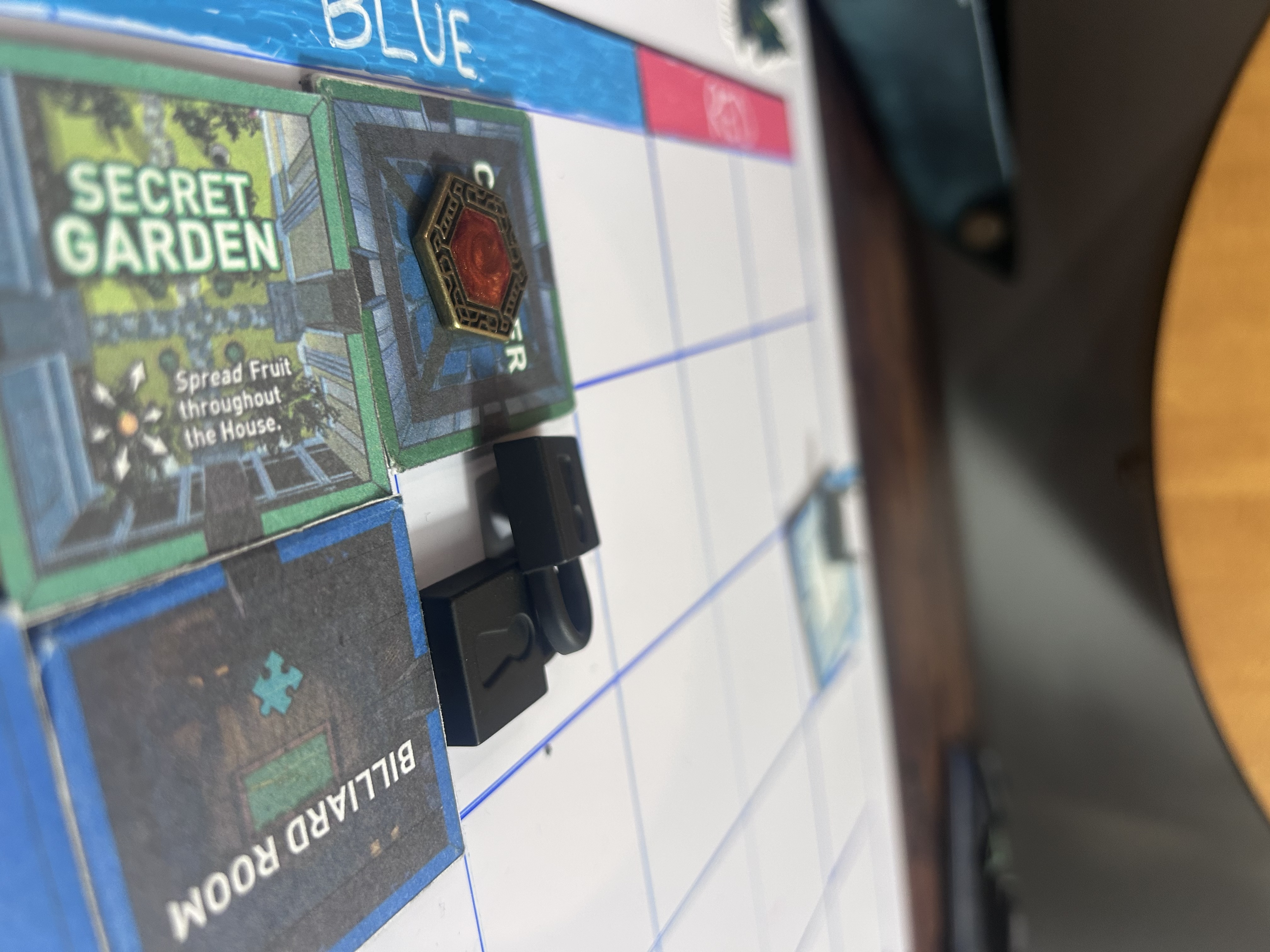
The run ended at the Cloister. Two overlapping lock tokens jammed into the same corner of the tile, plus a locked path above. Triple locked. The Antechamber was visible at the top of the board — one rank away — and there was nothing to do about it.
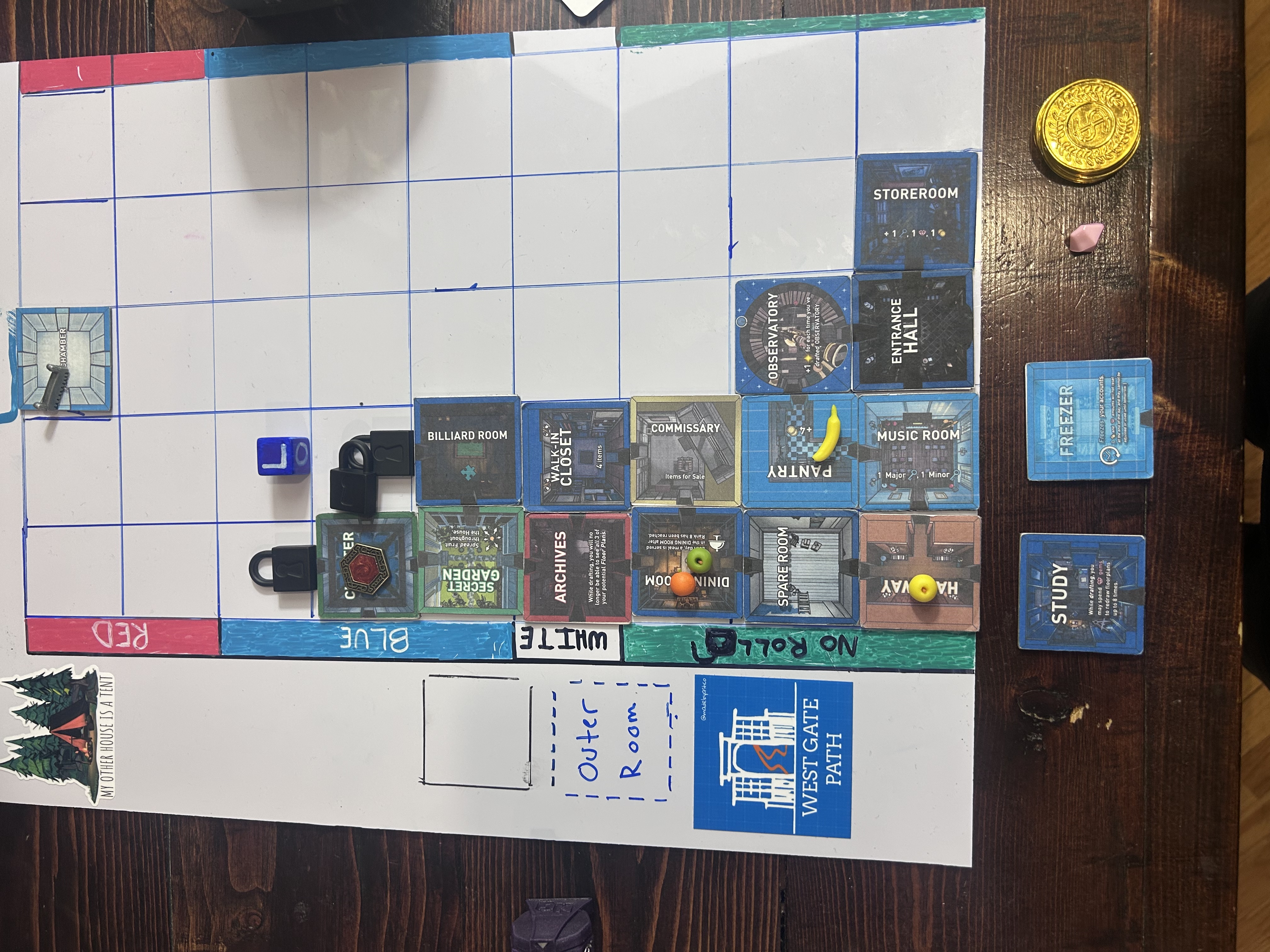
The overlapping locks are a physical component problem. When two adjacent rooms both carry locks, the tokens clash and it becomes hard to read the board state clearly. It needs a solution — whether that's a placement convention, smaller tokens, or something else. A photograph of a confusing situation is worth more than a paragraph describing it, so I took one.
Two questions I'm leaving open
Two design questions surfaced during this run that I'm not answering yet. First: should item cards without physical tokens be consumed immediately when drawn, to create consistency with token-based items? Second: is there a version of this game that works without the Alzara Prophecy Cards entirely? Both are filed in the design ideas log. Neither gets touched until there's more playtest data behind them.
The run didn't feel like a failure. It felt like the game working — a path built, decisions made, resources spent, and a house that pushed back. The house winning occasionally is part of the point. What matters is whether the moments between setup and end state felt like they meant something.
Most of them did.