The table was set. Tiles marked and sorted. Cards shuffled. The ornate key standing on the Antechamber at the far end of the board, waiting. Everything we'd been building toward for weeks was finally physical and ready. Then we played four turns and hit a wall.
Not a design wall — a probability wall. Which, as it turns out, is more interesting.
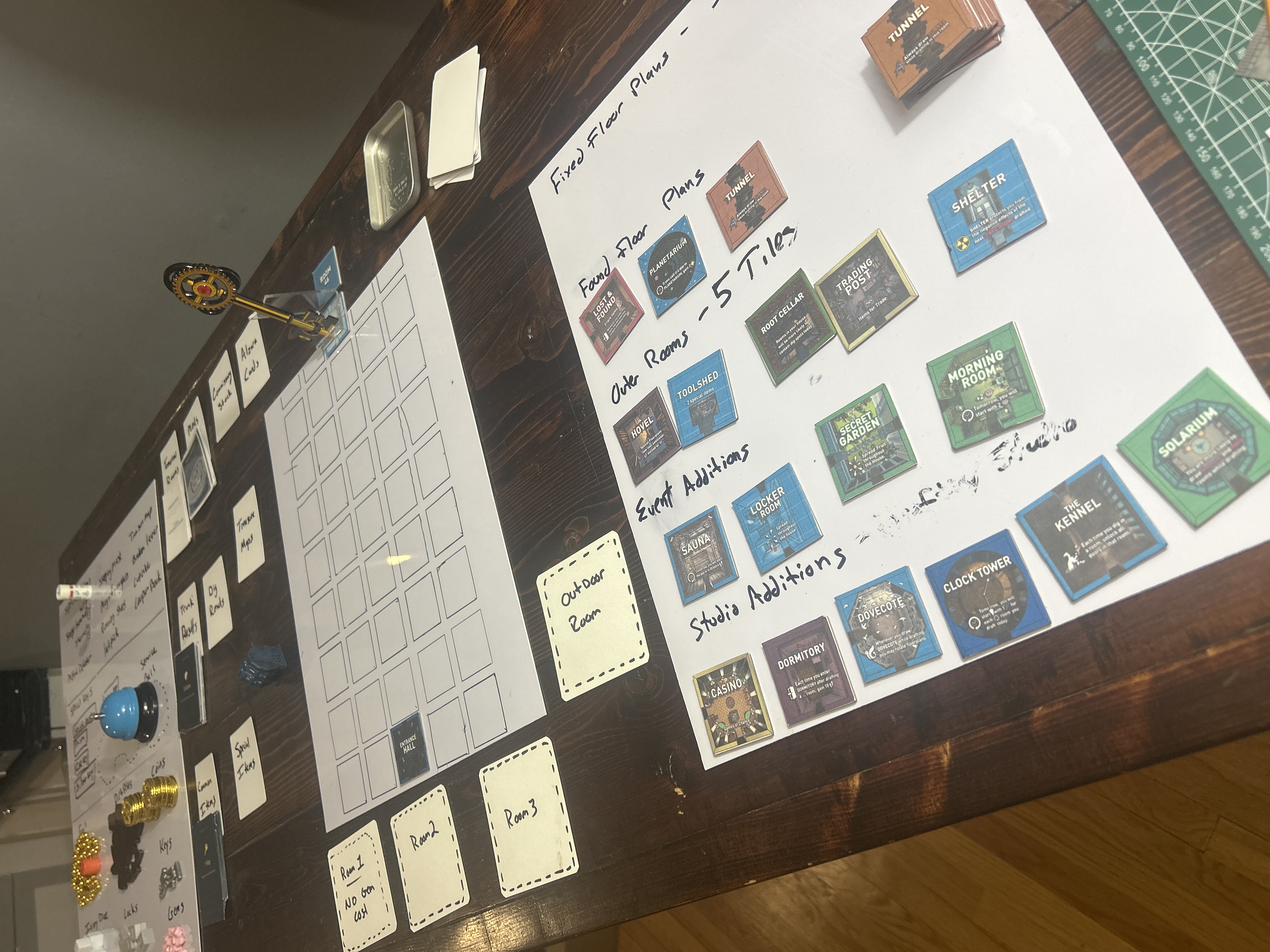
The run
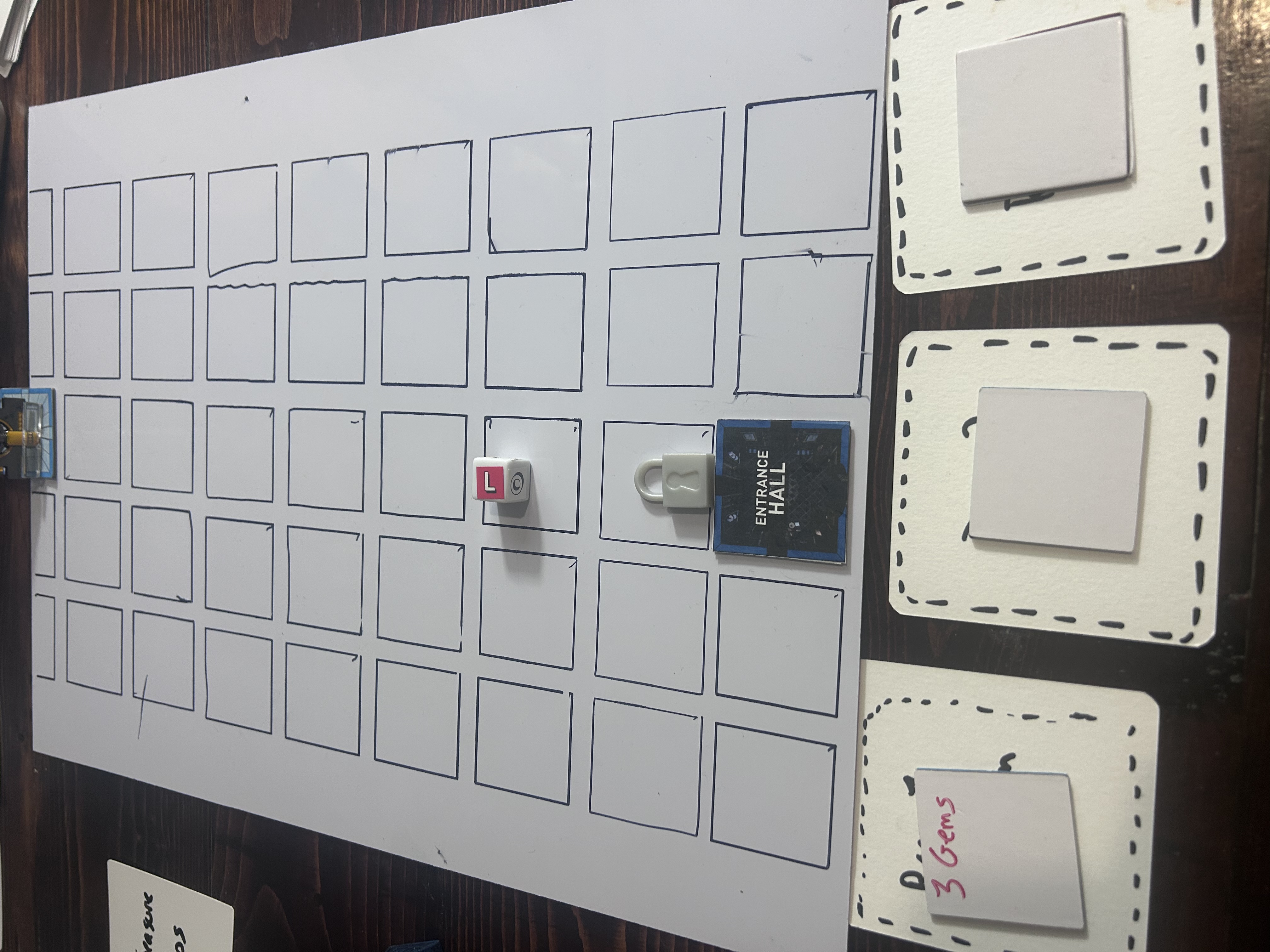
Start of run: 50 steps, 0 gems, 0 keys, 5 coins. First door out of the Entrance Hall — lock die rolled LOCKED. No key in hand at setup. Turned back. Tried a second door.
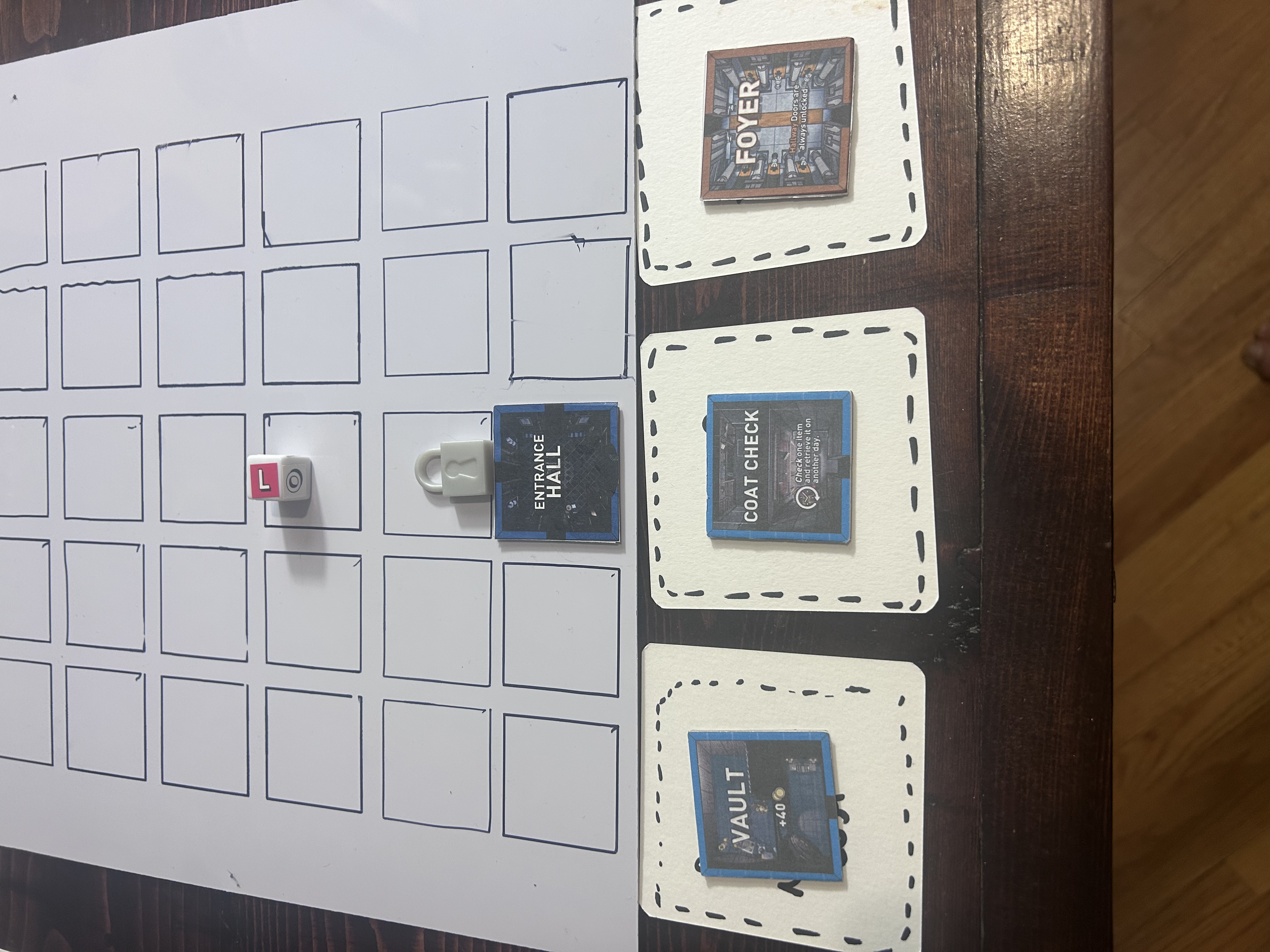
Drew three tiles. Slot 1: Vault. Slot 2 and 3: two more rooms, neither of them useful in this moment. The Vault costs 3 gems to draft in the VG — a steep price that keeps it out of early hands. In our flat-probability single-bag system, Slot 1's gem cost is always waived. The Vault cost us nothing. We placed it at Rank 2, Column 3.
Moved into the Vault. Collected 40 coins. Moved back to the Entrance Hall. Two steps spent, back to 48. Then a Bedroom came up — placed it, moved in, rolled the Mid die on draft, got OPEN, so a trunk was present. Opened it: drew a Trunk Result card showing 3 Coins. The Bedroom entry gave back +2 steps. Back to 50.
Rooms drafted: Vault (R2) · Bedroom (unknown rank)
Dead-ended by draft. 50 steps, 43 coins, 0 gems, 0 keys. No path forward.
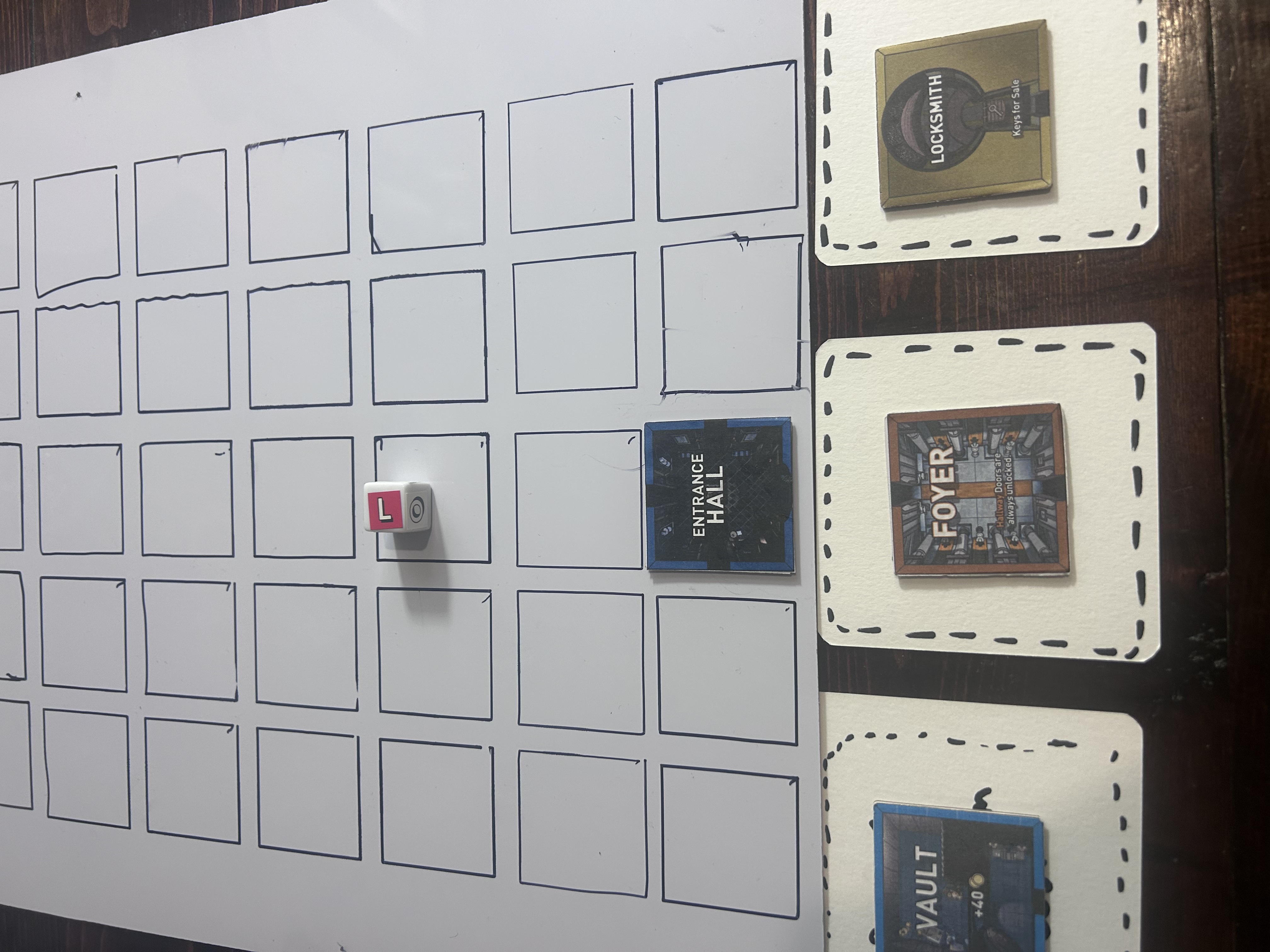
The second draft offered Vault and Foyer again — the bag hadn't been well shuffled, and the same tiles kept surfacing. With 0 gems and 0 keys, the Foyer (2 gems) and everything else in the draw were unreachable. The Vault was already placed. There was nothing to do. Run called.
What actually happened
This wasn't bad luck in the normal sense. It was a specific structural problem: the Vault at Rank 2 Slot 1 breaks the resource economy in a way the video game prevents through rarity weighting.
In the VG, the Vault is Rare — the top rarity tier. The draw system first selects a rarity tier, then selects a room from within it. At Rank 1–2 the game heavily favors Commonplace and Standard draws. Rare rooms surface consistently only at high ranks, after the common pool has been depleted. Additionally the Vault is a dead end — it never appears when the game is filtering for rooms with northern exits. Both constraints make early Vault vanishingly unlikely in the VG.
In our board game, every tile in the Active Bag has identical draw probability. Vault, Corridor, Bedroom, Closet — all equally likely on any draft. And Slot 1's waived gem cost removes the final natural barrier. The 3-gem cost that would price the Vault out of an early draw is irrelevant when Slot 1 is always free.
40 coins with no shop on the board and no gems to draft toward one is a dead economy. Coins become inert. You have the Sinclair fortune and no door to spend it through.
What we're doing about it
For now: nothing. One playtest isn't enough to know how bad this actually is in practice, or how often it happens. The decision is to leave the Vault in the flat pool, keep tracking, and see whether this is a common failure mode or a once-in-many-runs edge case. If it keeps killing early runs, the fix options are:
A placement restriction on the back of the Vault tile — Ranks 5+ only — which would prevent exactly this scenario without changing draw probability. Or accepting this as a "bad luck" run that teaches the player to draft laterally and build gem economy before pushing north — which is, after all, a lesson the VG also teaches, just through different means.
Is Vault in Slot 1 at Rank 2 a broken edge case that needs a rule, or is it a hard lesson about the bag that players internalize after one bad run? Hold for more playtest data.
What the table looked like
Beyond the Vault problem, the physical setup worked. The draft mat — three dashed-border slots side by side — is a clean solution. You place tiles face-down, read the backs, make decisions before you flip. The gem cost written in red marker is readable at arm's length. The lock die is the right size for the table. The coin tokens are satisfying to stack and move.
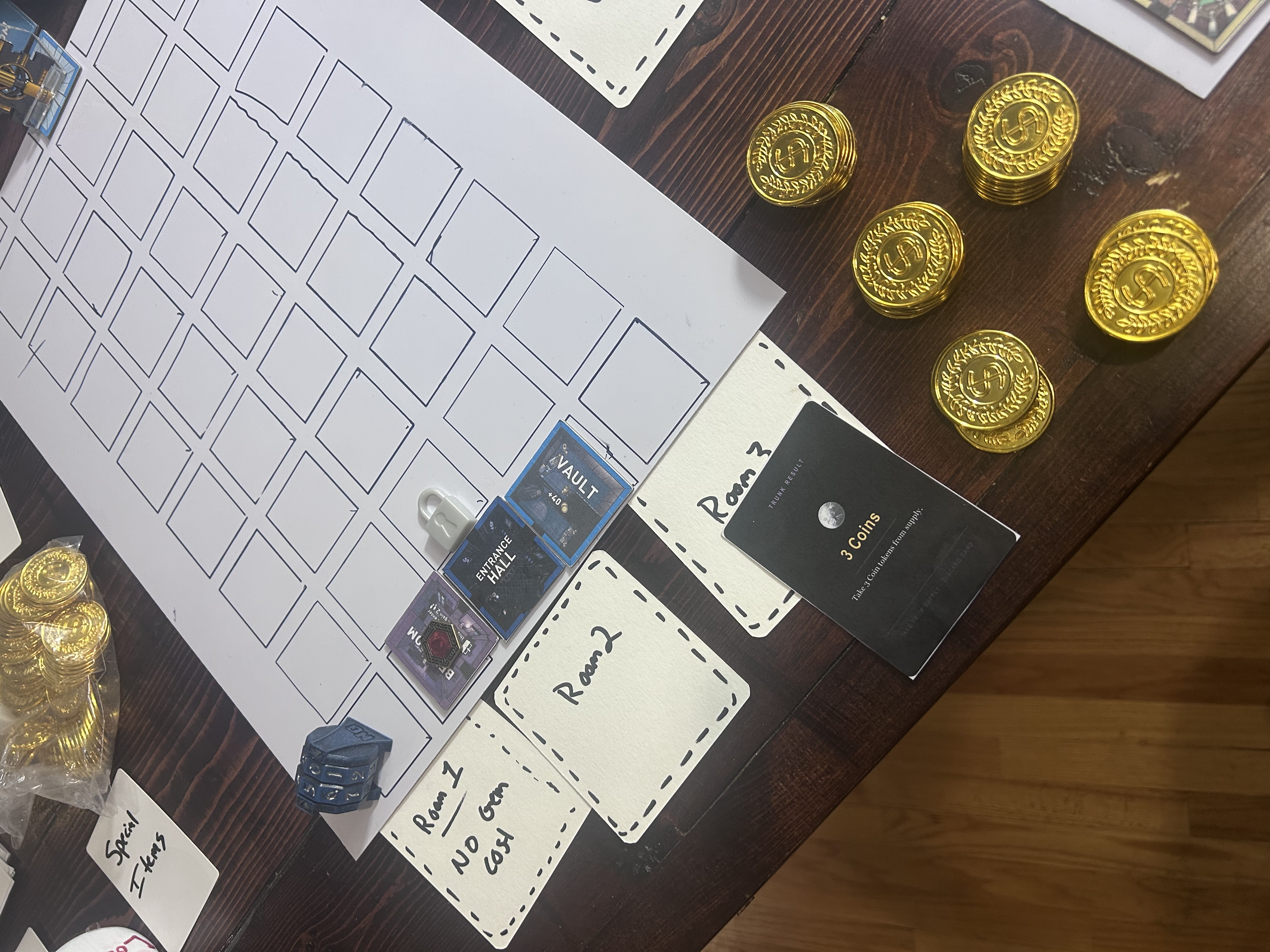
The card table across from the board held up — Trunk Results, Common Items, Tomorrow Rooms, Meals, Commissary Stock, Alzara Cards, Treasure Maps, Dig Results, Special Items all labeled and separated. When the trunk opened and we needed a Trunk Result card, the deck was exactly where it should be.
The tile back marking system passed its first test. At setup, sorting 86 tiles into their correct piles took under two minutes — Event, Studio, Found, Fixed, Outer all identified by their category letter without reading the tile face. That's the friction the system was designed to remove and it removed it.
What Day 2 needs to answer
Step economy. We never got far enough to feel it. The Vault run told us about probability distribution but nothing about whether 50 starting steps is the right number for a 45-minute run, whether the lock die at Rank 1–4 feels fair, or whether the path to the Antechamber is achievable in a first campaign. Those are the questions Day 2 needs to answer — and Day 2 starts with the bag shuffled properly this time.
The Active Bag needs a full 30-second shake before each run. Tiles are flat and stack easily — without aggressive mixing the same tiles cluster and resurface. This is a setup habit, not a rules problem, but worth stating explicitly in the setup sequence.