I didn't go to New Orleans to do research. I went because it was a week off and New Orleans is New Orleans. But somewhere on the second floor of the Sazerac House on Magazine Street, standing in front of a framed print I was not prepared for, I realized I had walked into the game I've been trying to build.
Look at that print. Dark brown ground. White etched illustration. A circular information structure radiating outward from a center point, each ring containing a different layer of knowledge. Buildings rendered in line art at the edges. Decorative border containing text that wraps the perimeter. It is not a map of Mt. Holly Estate, but it could be. The aesthetic is identical — the sense that information has been arranged with intention, that there is a logic to where things are placed, that someone built this world and left traces of how it works.
A Building That Teaches Itself
The Sazerac House is a working distillery and cocktail museum organized across multiple floors, each with a distinct identity. You move through rooms. Each room has a purpose. Each room contains objects that teach you something about what the room is for. There is no map handed to you at the door. You learn the building by being inside it.
That is exactly what Mt. Holly Estate does. You draft a room. You enter it. The room teaches you what it is.
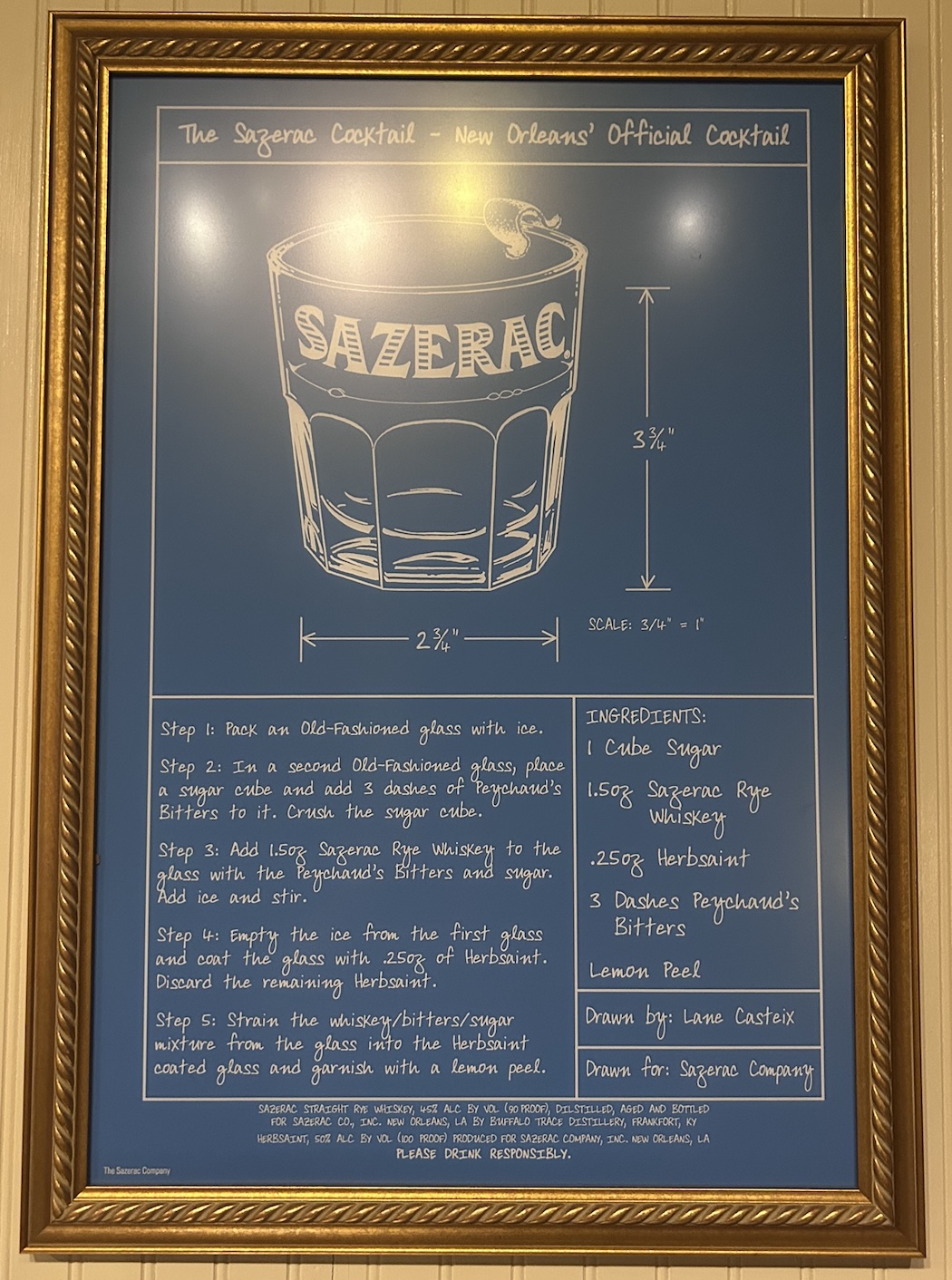
The cocktail recipe diagram stopped me. Blue ground. White line art. A glass rendered as a technical drawing with dimensions annotated, ingredients listed in a structured grid, steps numbered. It is a blueprint. The Sazerac House designed its cocktail recipe as if it were an architectural document — as if the drink were a thing to be built, not just mixed. That framing, objects as systems with rules and tolerances, is the entire design language of Blue Prince.
The Draft Mechanic, in Physical Form
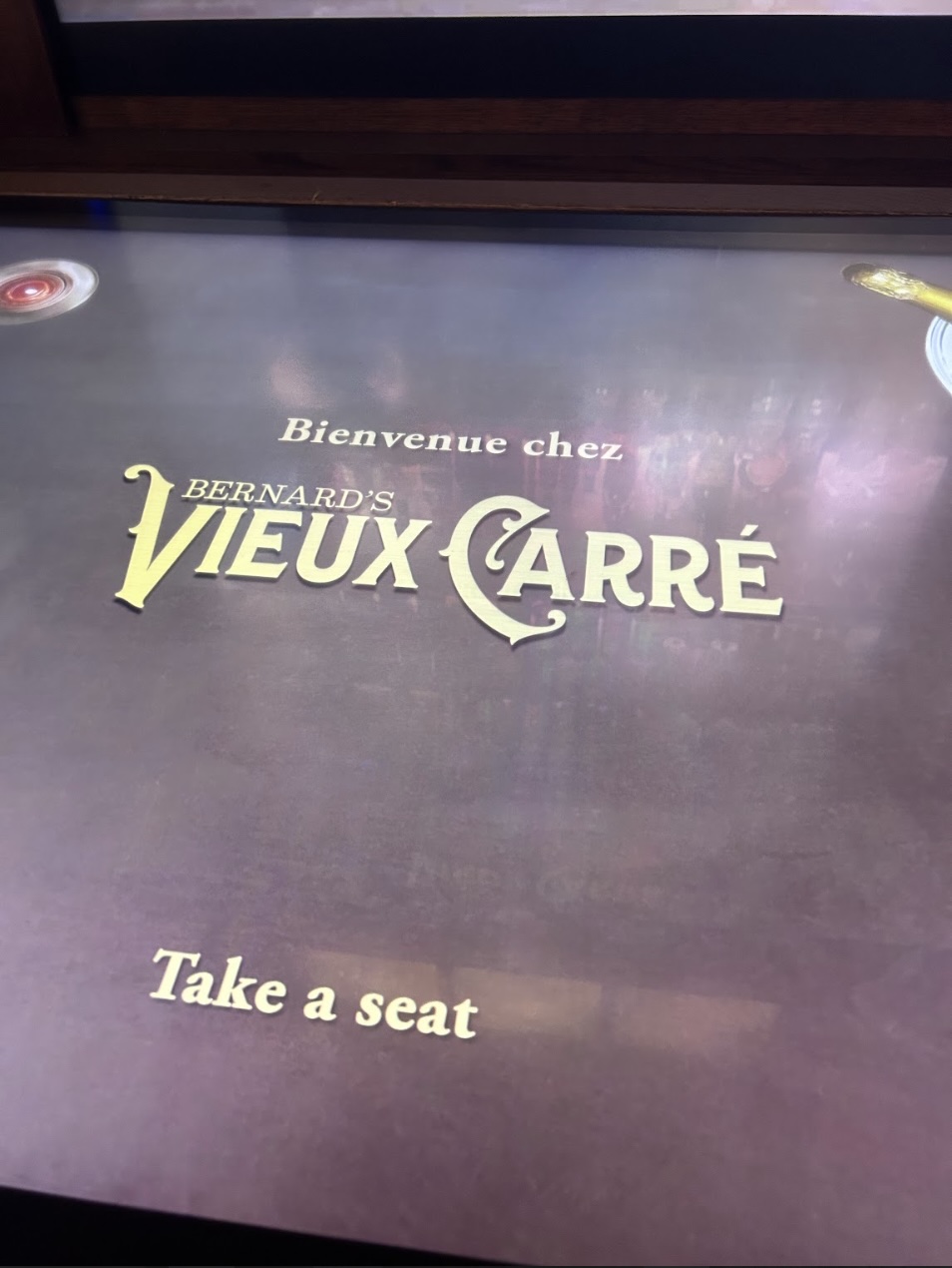
On one of the upper floors there's an interactive table. It's a large round surface with a projected display — a circular arrangement of coasters around the perimeter. The prompt on the table reads: Choose a coaster. Take a seat.
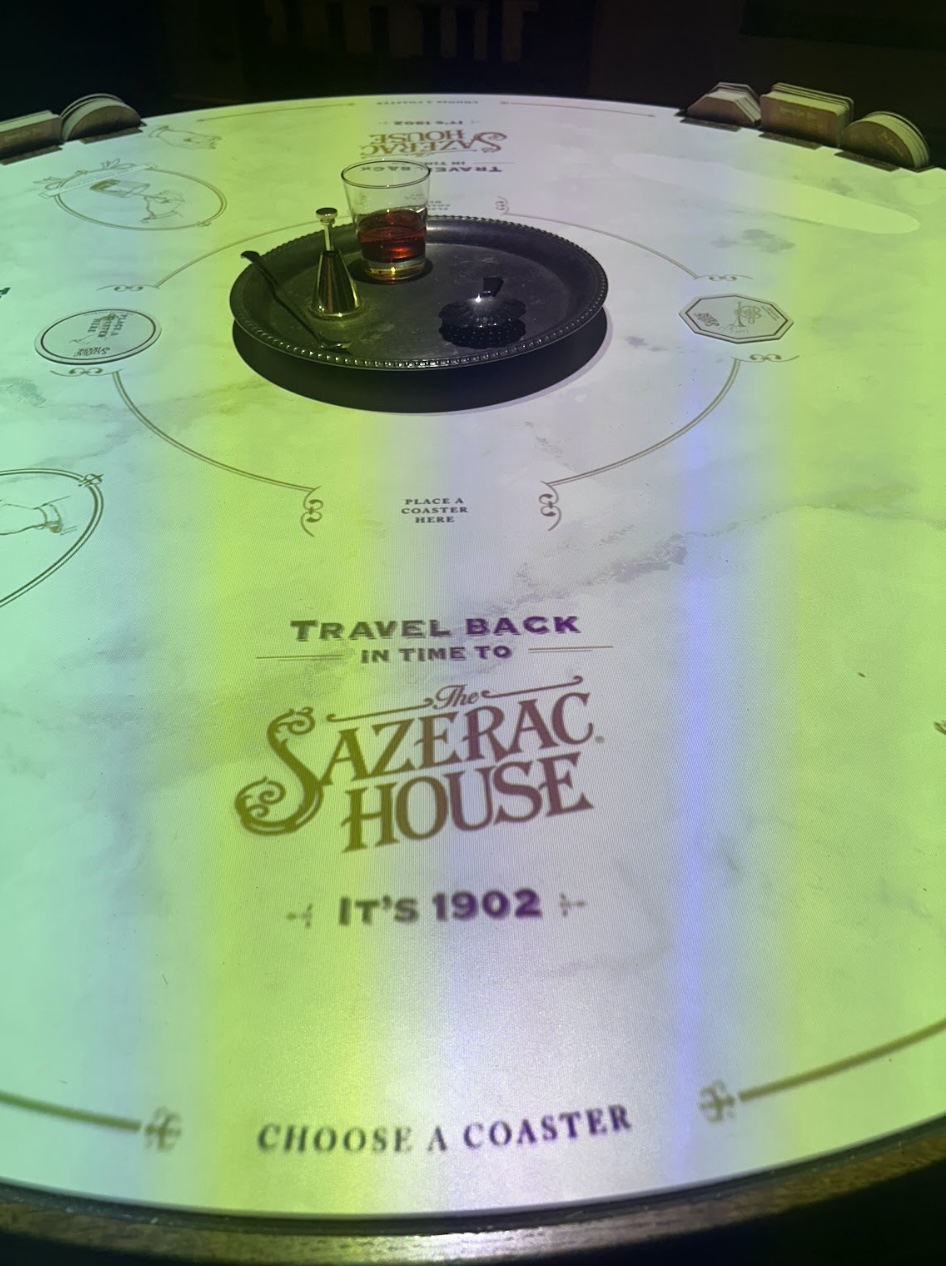
You pick one. You sit down. The table responds. Something happens based on what you chose.
I stood there for a moment longer than was probably socially normal. This is the draft mechanic. Draw from a set of options. Choose one. Commit to the consequence. The Blue Prince board game at its most distilled. Someone in New Orleans built this without knowing they were designing a game mechanic, and it works exactly the way I want tiles to work on the table.


Function Wearing a Coat
The bitters tanks are in a working production room — stainless steel industrial vessels with pressure fittings and regulatory labels. And affixed to each one: an ornate gold-on-black label. The Sazerac House logo. The tank number. The capacity. DSP LA 20027. Underneath, in plain white label stock: TAX PAID.
That combination — ornate meets industrial, aristocratic label on a functional object — is exactly what Blue Prince rooms feel like. The Furnace has a door. The Darkroom has equipment. The Commissary has a service bell. Every room in the estate is a functional space wearing the coat of its history. The bitters tanks are the Furnace. They do something, and they know it.
Every Room Announces Itself
Each floor of the Sazerac House has a name. Each room within each floor has a name. The names are displayed prominently — on walls, on floors, in frosted glass. You always know where you are. You always know what this room is for. There is no ambiguity about whether you have entered a new space.
This is something the board game does well already — every tile has a name printed on it — but the Sazerac House does something more. It gives each room a voice. The Vieux Carré room says Bienvenue chez before it says anything else. The welcome mat, in French, before the content. Mt. Holly does this too. The Boudoir is not just a bedroom. The Rumpus Room is not just a sitting room. The name carries register.
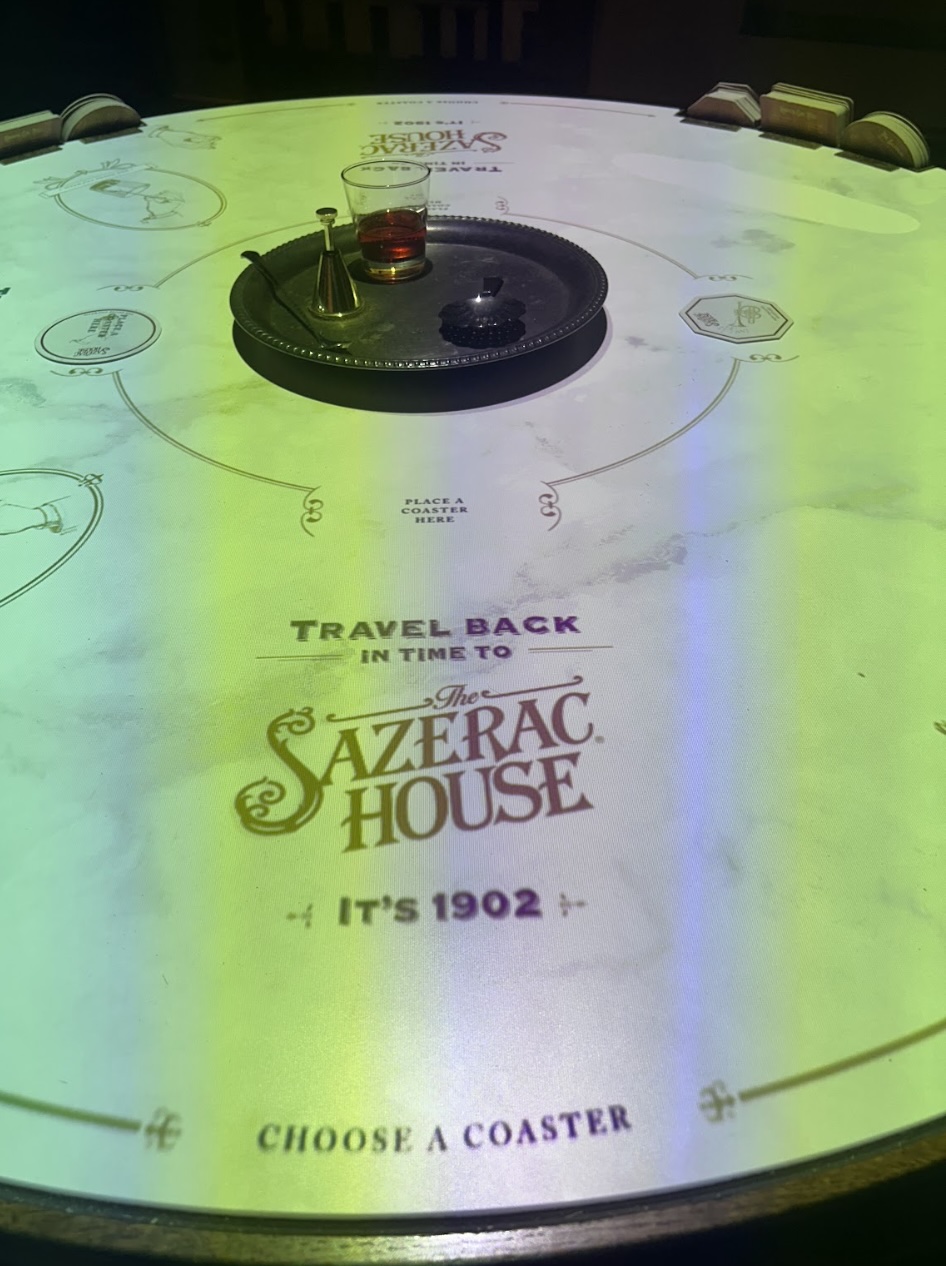
The Sazerac House is a museum that feels like a game, and Blue Prince is a game that feels like a building. The overlap is not coincidence — both are organized around the same premise: rooms that have purpose, objects that carry meaning, and movement through space as the primary mode of discovery. The research was accidental. The confirmation was not.
I came home with eight photos and a clearer sense of what the board game is trying to be. Not a simulation of the video game. A building you can put on a table. One that announces itself, teaches you what it is, and asks you to choose.