Yesterday's post ended mid-session. The Secret Garden Key was in hand. The gem situation was still dire. The board had more rooms on it than any previous run at the same session length, but the question of whether that counted for anything — whether the run had an actual path forward or was just a longer failure — stayed open. This post is what happened next.
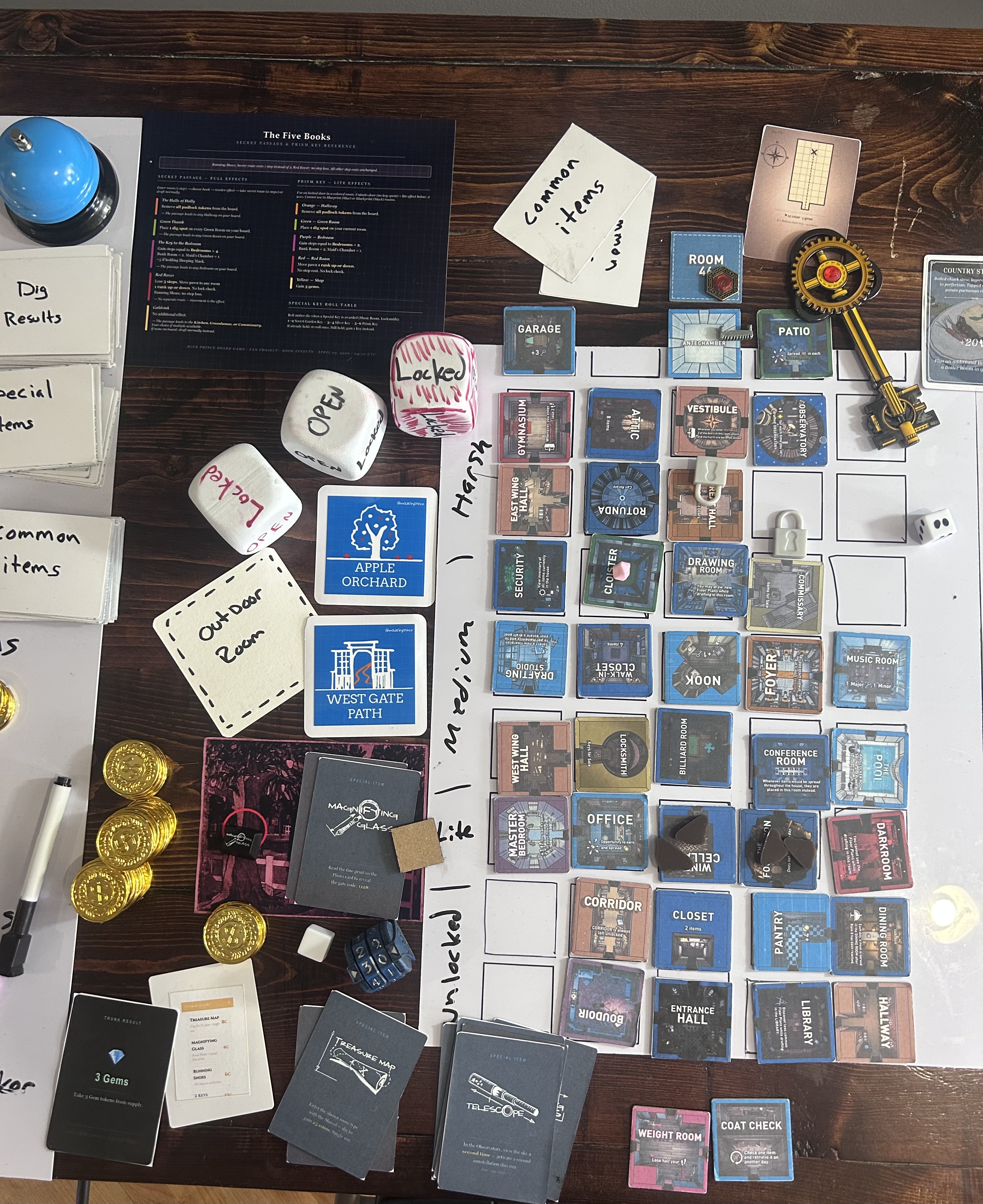
Before the story: the headline is that Campaign 4 Day 1 was completed with a win. That's the second time Room 46 has been reached across four campaigns. It's also the first time it's been reached on Day 1 of any campaign. Previous wins came later in their campaigns — runs that benefited from accumulated permanent unlocks and Tomorrow Room carry-forwards. This one didn't have any of that cumulative support. The run stood on its own.
But calling it a "Day 1 win" hides something true about the pacing. The in-game time was one day. The real-world time was multiple sessions spread across two calendar days. Lots of pausing. Lots of re-reading the glossary. Lots of staring at the board trying to decide which draft mattered most.
That's the thesis yesterday's post opened with: Blue Prince is meant to be played slowly. This run is what slow actually looks like — not slow as in dragging, but slow as in deliberate. Every draft was a real decision. The economy was tight enough that one wrong pick at the wrong rank would have collapsed the path. Reading the glossary entry on each new room. Thinking about what the spread mechanic was doing to the Wine Cellar, what the Conference Room was absorbing, which door to push through first.
Where yesterday left off
Ten rooms placed at Rank 4. Zero gems for forty-five minutes. The Music Room roll had come up a two. The Vault had dropped early, stacking forty coins into a closed market. The Secret Garden Key had just arrived via the Locksmith, and the notes called that moment out as the run's first real event.
Picking up from there, the next several drafts started building the middle of the mansion. Master Bedroom, Office, Wine Cellar, Darkroom, West Wing Hall. The Billiard Room came down and its Key puzzle paid out. The gem economy finally opened — not a flood, but enough that the one-gem doors stopped being paywalls and became costs worth paying.
The Commissary and the bankroll
By the time the Commissary came up, the coins from the Vault had finally found a use. Drafting it felt different than drafting any other Shop earlier in the run would have — walking into a store with money in your pocket is a fundamentally different experience than walking into one without.
The notes capture the feeling exactly: Commissary felt exciting when I drafted it. Going in with a bankroll. That's the four-part structure yesterday's post identified — cost, chance, named reward, clear purpose — working in the other direction. The Vault's forty coins had been dead weight for most of the run. The Commissary turned them into a choice.
The near dead-end
Then the run almost ended.
There's a point in a Blue Prince run where you can see the step count, the gem count, and the available doors, and the math just doesn't work. You count the rooms needed to reach the next rank. You count the gems needed to draft the rooms that let you get there. You subtract the steps you have. The number goes negative.
The board was in that state for a full draft cycle. Enough placed rooms that dead-end tiles were crowding the draft. Not enough cost-free options to route north. The path upward looked like it was closing.
Then Great Hall appeared on the draft mat.
Foyer on the table, Great Hall in hand
Foyer had been placed about eight drafts earlier. That's critical. Foyer's effect reads that all Hallway doors are always unlocked — every Hallway already on the board, and every future Hallway drafted. So when the Great Hall came up, its seven locked doors weren't locked. The Foyer had already paid for them, preemptively, from eight drafts ago.
It felt like getting the lever for free.
That's the note the sheet captures: Just drafted Great Hall w/ Foyer on the table — felt like a Big moment! The exclamation is in the original. It's the only exclamation on six pages of notes. This was the moment the possibility of winning opened back up. The dead-end board state that had been closing in suddenly had a hallway node with seven unlocked doors branching off it, and a route north was live again.
The streak
From Great Hall, the rest of the climb went better than it had any right to. A streak of drafts surfaced rooms that fit what the board needed — Drafting Studio came up for the first time this campaign, which produced its own noted reaction in red pen ("Whoa!"), followed by Kennel as the Studio Addition. Security, Cloister, Drawing Room, Commissary. East Wing Hall, Rotunda. Gymnasium, Attic, Vestibule, Observatory.
The run also benefited from Ivory Dice. The Ivory Die discards all three drawn tiles and lets you redraw three new ones from the same tiers — a re-roll for the whole draft rather than a single die. Two of them got spent during the climb, converting mediocre three-tile draws into ones that actually fit the northern push. That's not luck on its own. It's the mechanic doing what it's supposed to do: converting saved resources into saved drafts at the moment the run could least afford a bad one.
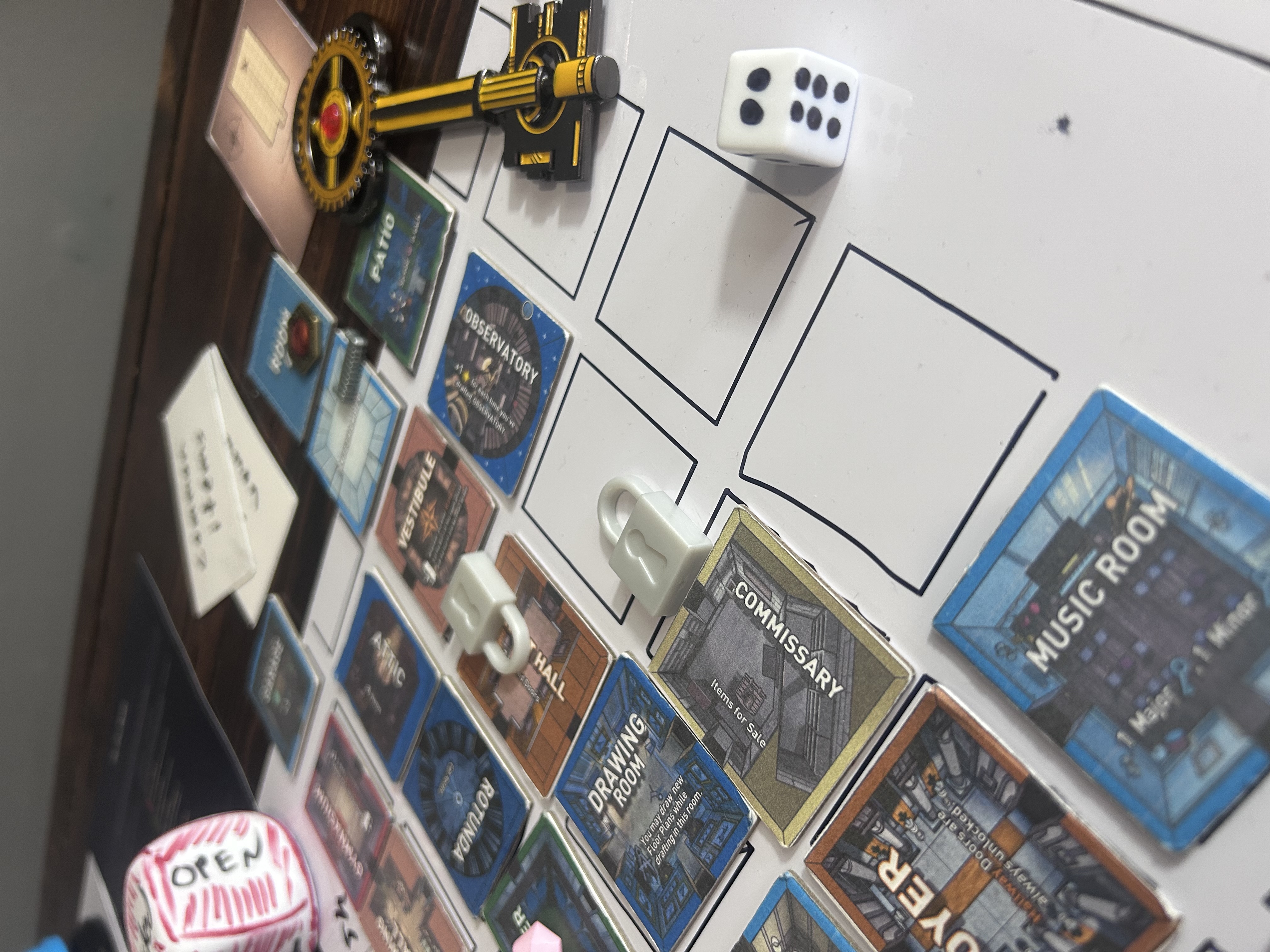
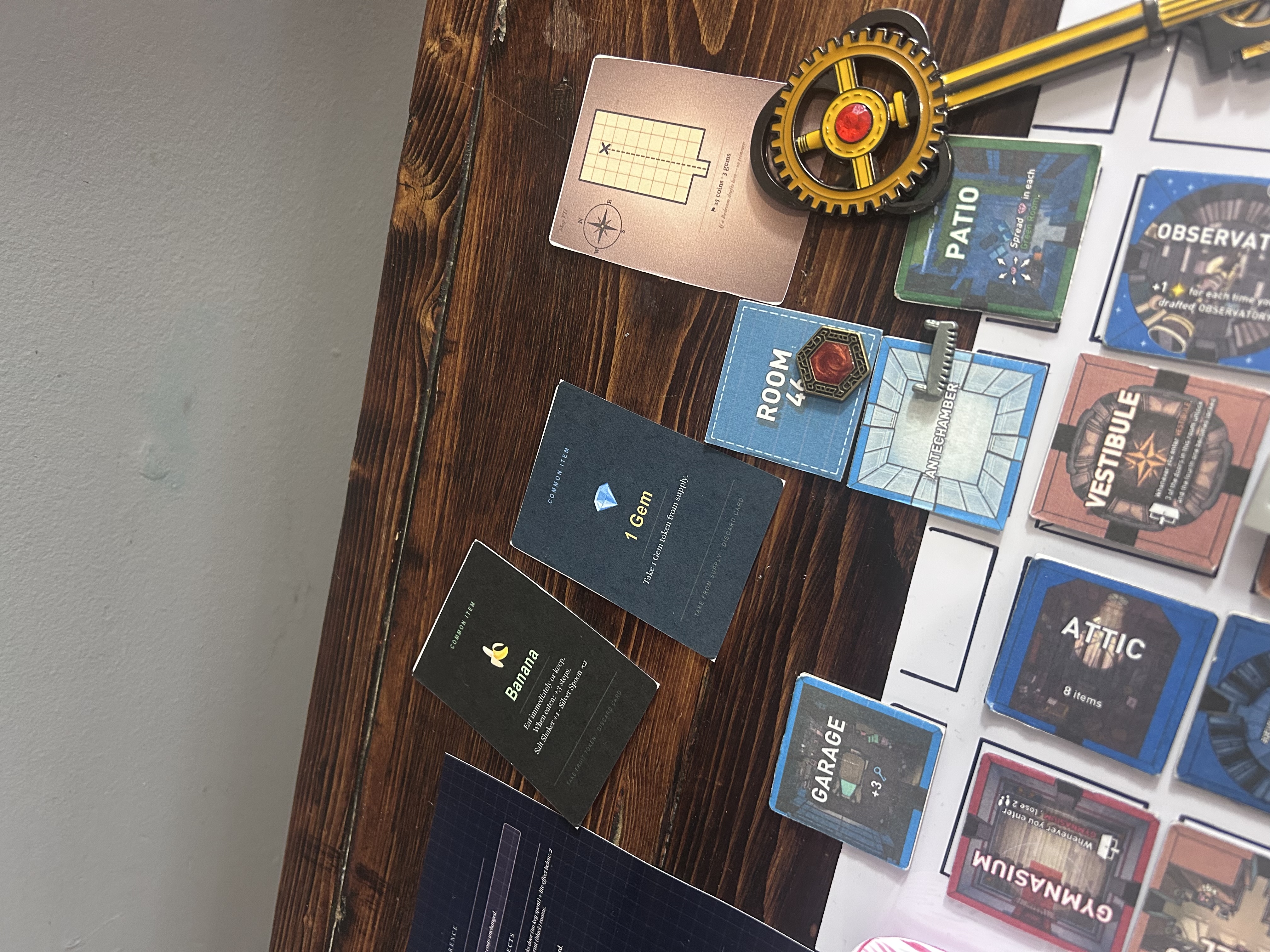
By the time the Garage, Patio, and Antechamber tiles landed, the board looked like the photo above. Thirty-five rooms placed. Steps still in the tank. The big gold key sitting on the Room 46 tile, waiting.
Early run: 0 gems for 45 minutes · Vault at Rank 2 · Music Room rolled a 2
Mid-run pivot: Locksmith → Secret Garden Key · Commissary drafted with bankroll
Near dead-end: step/gem math went negative for one draft cycle
→ Great Hall drafted with Foyer already placed — 7 unlocked doors, lever "for free"
Drafting Studio first-time appearance ("Whoa!") · Kennel added as Studio Addition
Streak: Security · Cloister · Drawing Room · Rotunda · Attic · Vestibule
Observatory drafted (first time) → Planetarium added as Found Floorplan
Garage drafted → West Gate Path revealed · first campaign unlock on the sheet
2 Ivory Dice spent during the climb — redraw-the-draft conversions
Antechamber reached · Room 46 key claimed · Win
What made the win feel like a win
The milestone isn't just reaching Room 46. Reaching it has happened before. What distinguishes this run is how it got there — no permanent unlocks cushioning the start, a real crisis moment mid-run, and a reversal that came from a draft sequence that couldn't have been planned for.
Campaign 4, Day 1 — The Slow Win
Second Room 46 reached across all campaigns. First reached on Day 1 of any campaign. Campaign 4 is a fresh start — no prior-campaign unlocks carried forward, no accumulated starting steps, no Tomorrow Room bonuses, no coin savings. 50 steps, 0 gems, 5 coins, a blank Campaign Sheet. The manor decided today would be the day, and the only reason today worked was that the drafts north of Rank 4 happened to include a Hallway with seven free doors on the exact turn the run needed one.
Two permanent unlocks happened during this run. Drafting the Garage revealed the West Gate Path — the first sticker on a fresh Campaign Sheet. Drafting the Observatory for the first time pulled in the Planetarium as a Found Floorplan. Both are moments another run would have stopped to savor. This one didn't.
By the time the Planetarium came up, the top of the mansion was close enough to see, and the proximity of the win swallowed the discovery. The Planetarium deserved its own moment. It got an acknowledgment and a return to the draft. That's worth noting as a design observation: when two exciting beats compete, the larger one wins. A permanent campaign unlock — a found room, a Foundation milestone, an item revealed — can be eclipsed by a run-ending beat sitting three drafts away.
What did stay dark: the outdoor route itself. The West Gate Path got revealed but no pawn walked through an outdoor door this run. The Shelter Tokens sat unused for the whole session. Those systems going dark didn't matter for the win — the path the manor offered was the one that worked — but they're patterns worth tracking.
That's the other thing a slow playthrough teaches. You don't need every system to fire. You need the systems that do fire to compose into something coherent. Foyer + Great Hall did that. Ivory Dice + a streak of good top-half drafts did that. The Secret Garden Key did that eight drafts before it was needed, then did it again when the lever path came together.
The notes at the end
One note from the back pages asked an honest question before the Antechamber was reached: wonder if I ran out of steps in Antechamber if I lose? The run didn't answer that one — steps were still in the tank at the end. It's the kind of question that only gets answered when a run goes deep enough to almost fail at the top, and so far no run has ended that way. Worth flagging for a future session.
The notes also call out first-time rooms specifically. Drafting Studio had never come up across the previous three campaigns. Observatory had never been drafted (despite the Telescope being in hand, which produced its own design question about the Observatory/Telescope interaction). Kennel got added as a Studio Addition and earned the only all-caps note on the sheet: My fav additional room!
First-time rooms matter more than the run log suggests. Each one is a small piece of the manor being seen for the first time — which, for a game built around the idea of a house that reveals itself through drafting, is one of the core loops working as designed.
What this run didn't settle
The Vault question from yesterday is still open. Forty coins at Rank 2 still created a dead early economy, and this run survived it, which doesn't mean every run will. One Day 1 win isn't enough data to close the rank-restriction question.
The gem desert also still happened. For forty-five minutes there were no gems, and the only reason the run didn't end in that stretch was the Locksmith arriving at the right moment. Without that arrival, this would have been another Gem Desert post, not a Slow Win post. The underlying probability problem hasn't been fixed — this run just routed around it.
And the item systems that didn't fire remain flagged. Shovel never appeared. Metal Detector never appeared. Fruit didn't factor in. The Common Items deck barely moved. That pattern is now consistent across enough runs that it's worth calling a pattern — when the early economy is tight, entire downstream systems stay dark for the whole session.
Does the Vault need a rank restriction, or is routing around it part of the design? Is the gem desert pattern a probability problem or an economy problem, now that it's been observed through a winning run? How often does a Foyer-plus-Great-Hall moment happen naturally, and is the game's best emotional beat something that requires both rooms on the board at the right time? What fires if the Antechamber is reached with no steps left — loss, or is there a grace condition?
The board is still set up. A photo was taken. The handwritten notes go in the box. The Campaign Sheet picked up two new stickers this run — West Gate Path and Planetarium — permanent marks of what got found on the way to the top. The manor remembers, and now the table does too.