I was over-prepared and over-confident going into today. I'd spent the past week documenting systems, formalizing game language, building a cover page, printing reference cards, designing a QR code prototype. The table looked good. The documentation looked good. I had convinced myself the game was in pretty solid shape.
It was not in pretty solid shape.
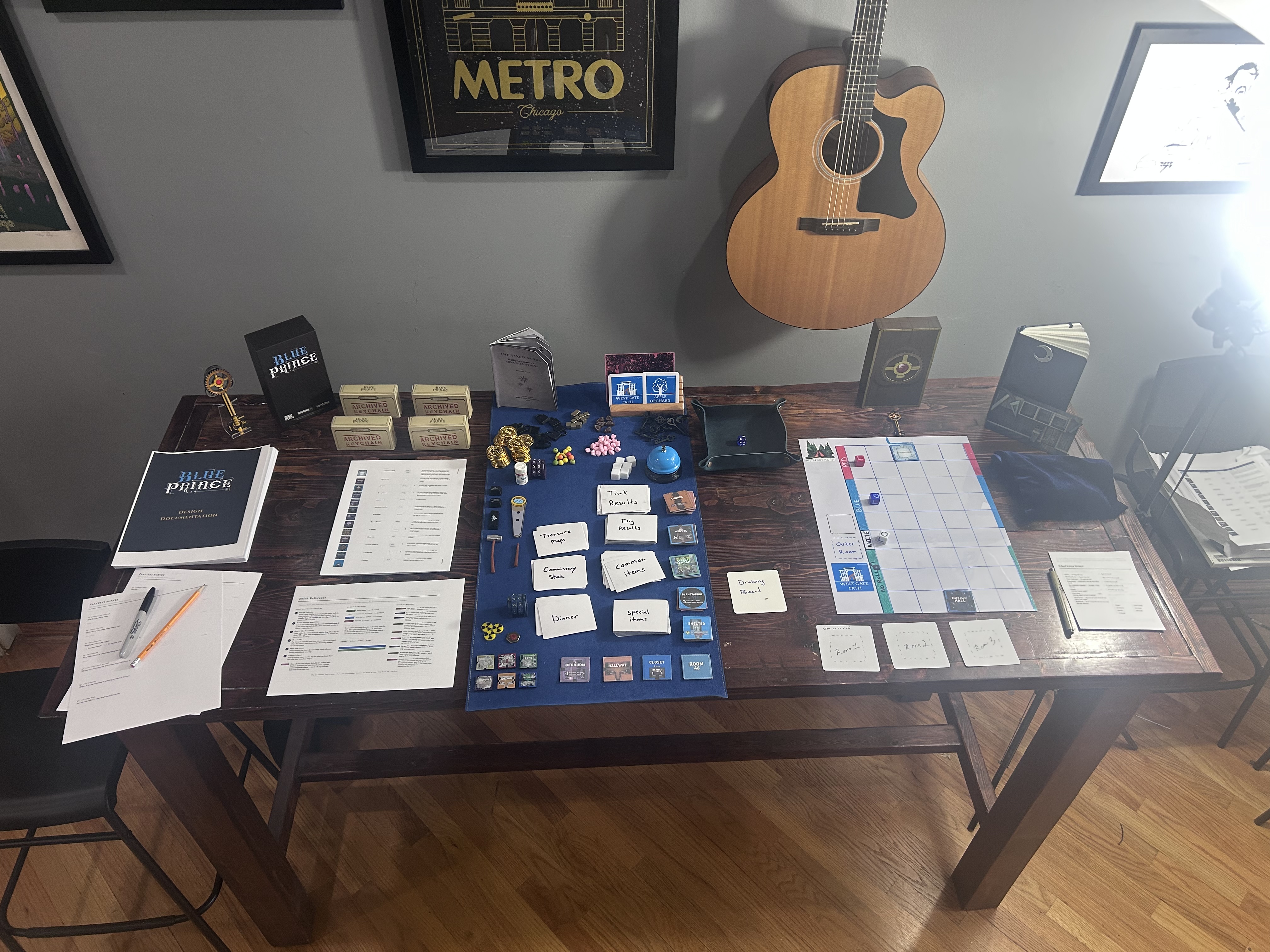
The setup
Mike O. came back for his second session. He has never played the video game — he was interested enough after today that he asked me to show it to him when we were done. Chris L. was new — no video game experience, no board game context, coming in completely cold. The plan was to run them co-op for the full session while I observed and took notes.
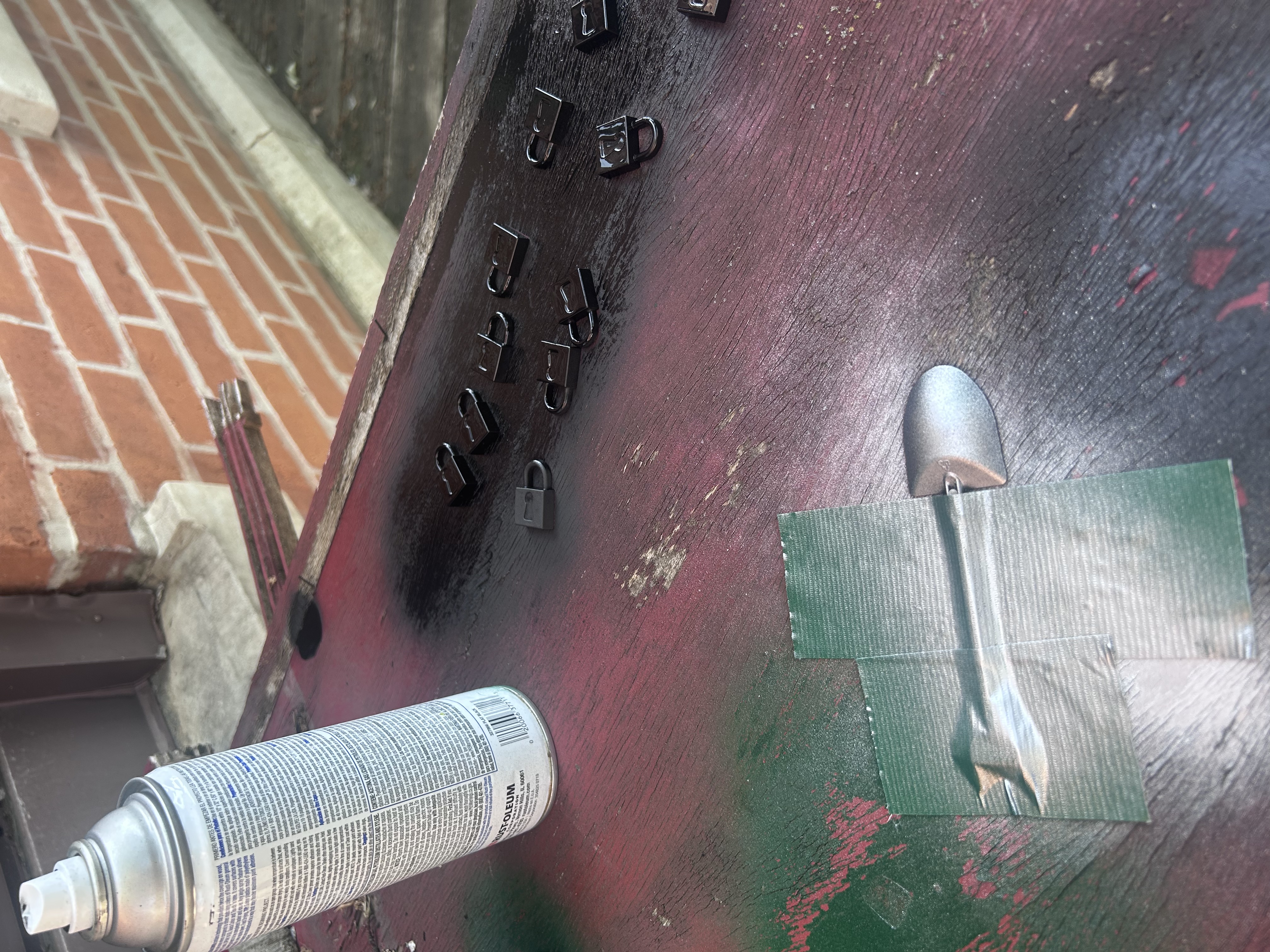
I'd also done some work that morning most players would never see: spray painting 20 padlock tokens black and the Shovel gray on the front porch before they arrived. This is what prototype development looks like at this stage — half graphic design, half craft project.
How it went
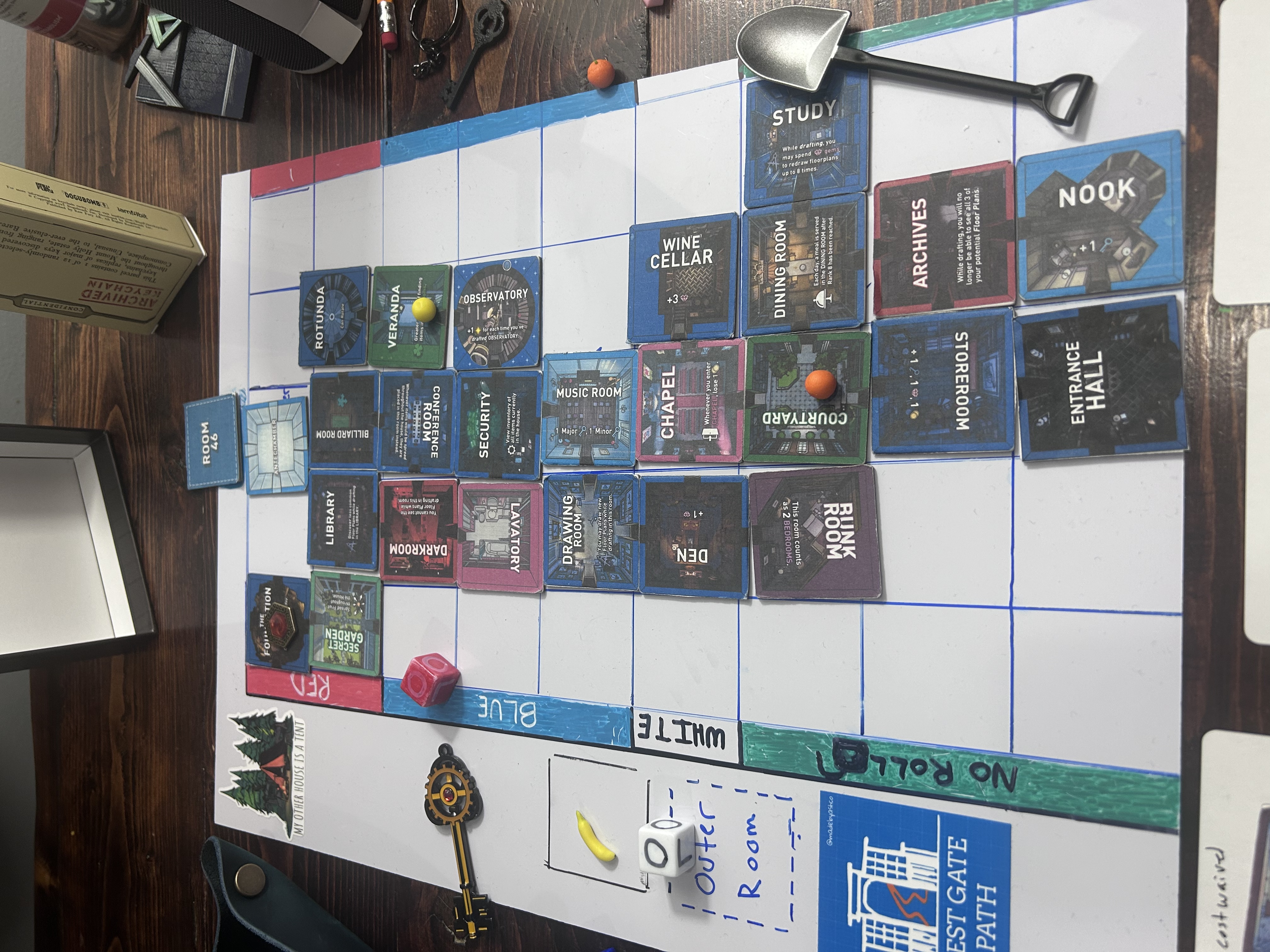
They played for over three hours. They got through three full runs. They reached Day 3, opened the Antechamber, and ended one room away from the win. I watched pages of notes pile up as question after question surfaced that I thought I'd answered in the documentation.
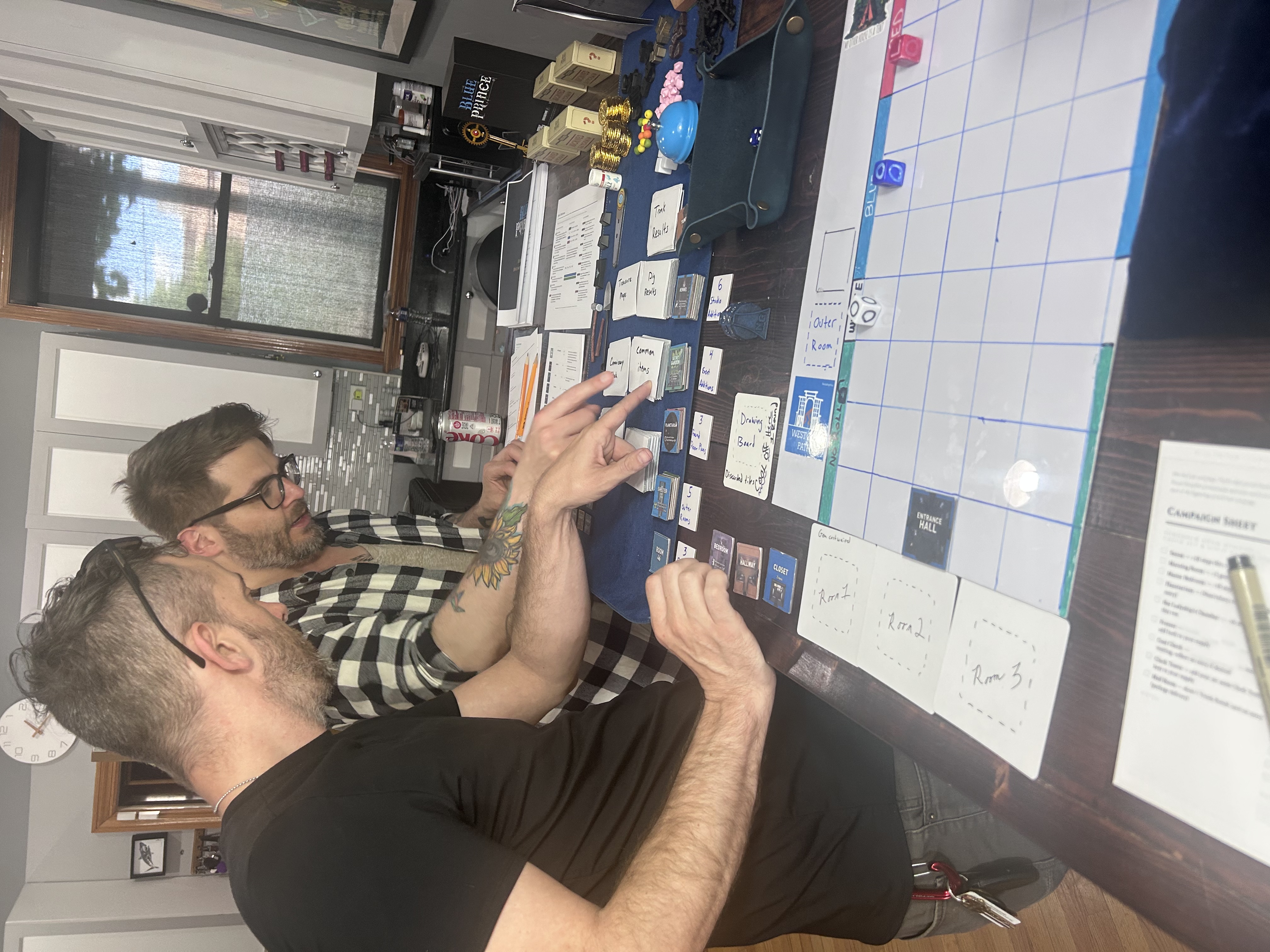
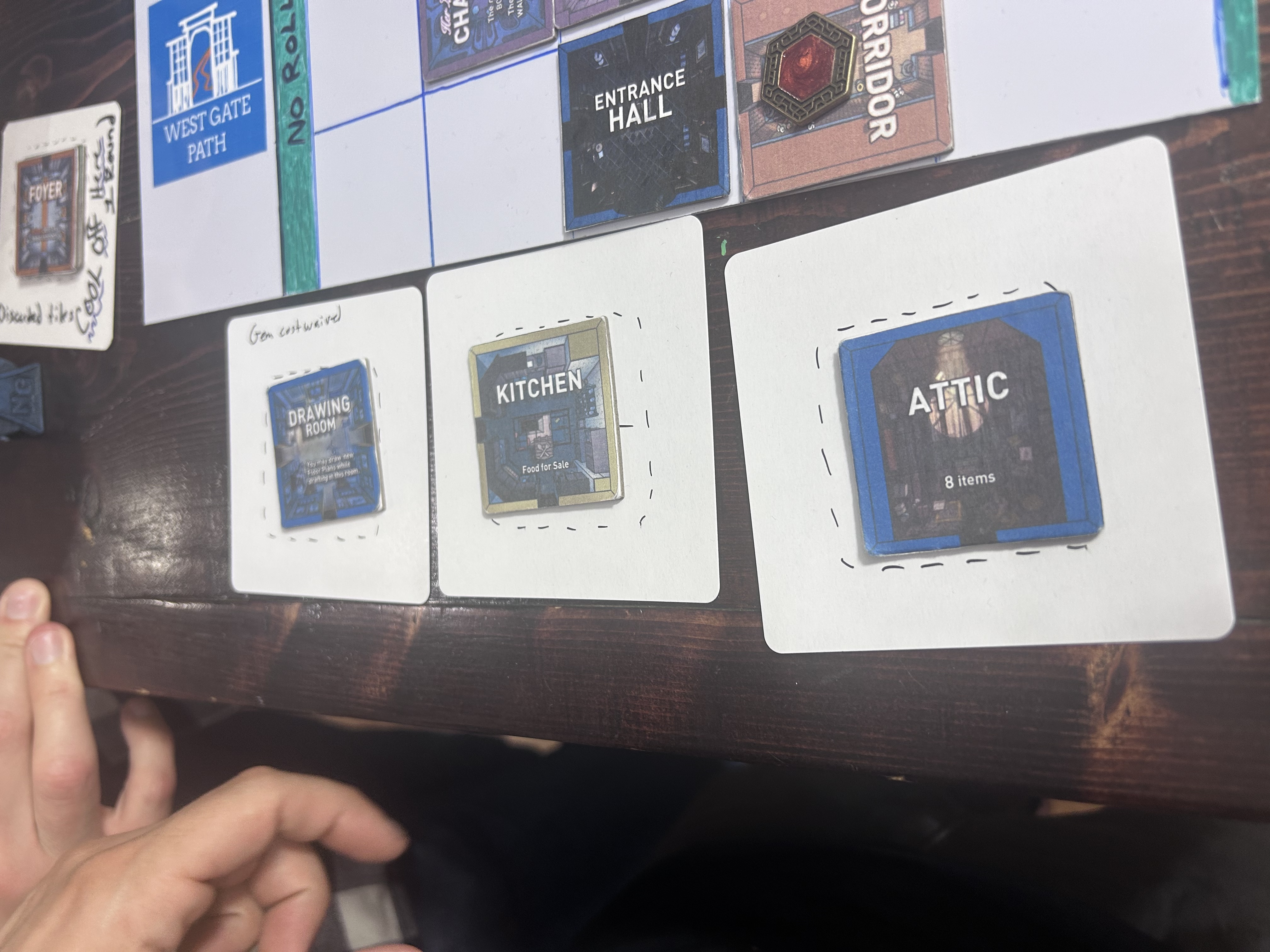
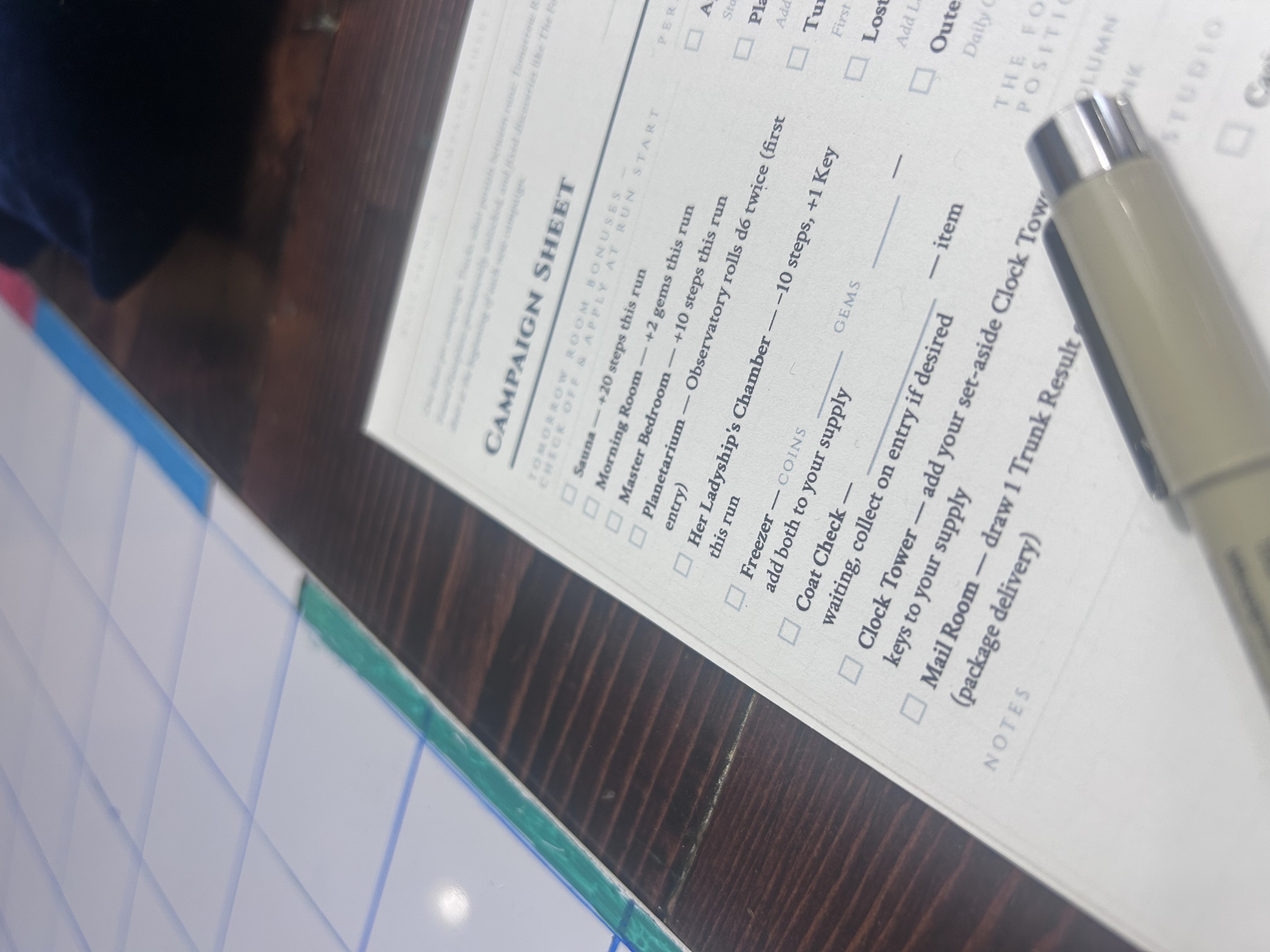
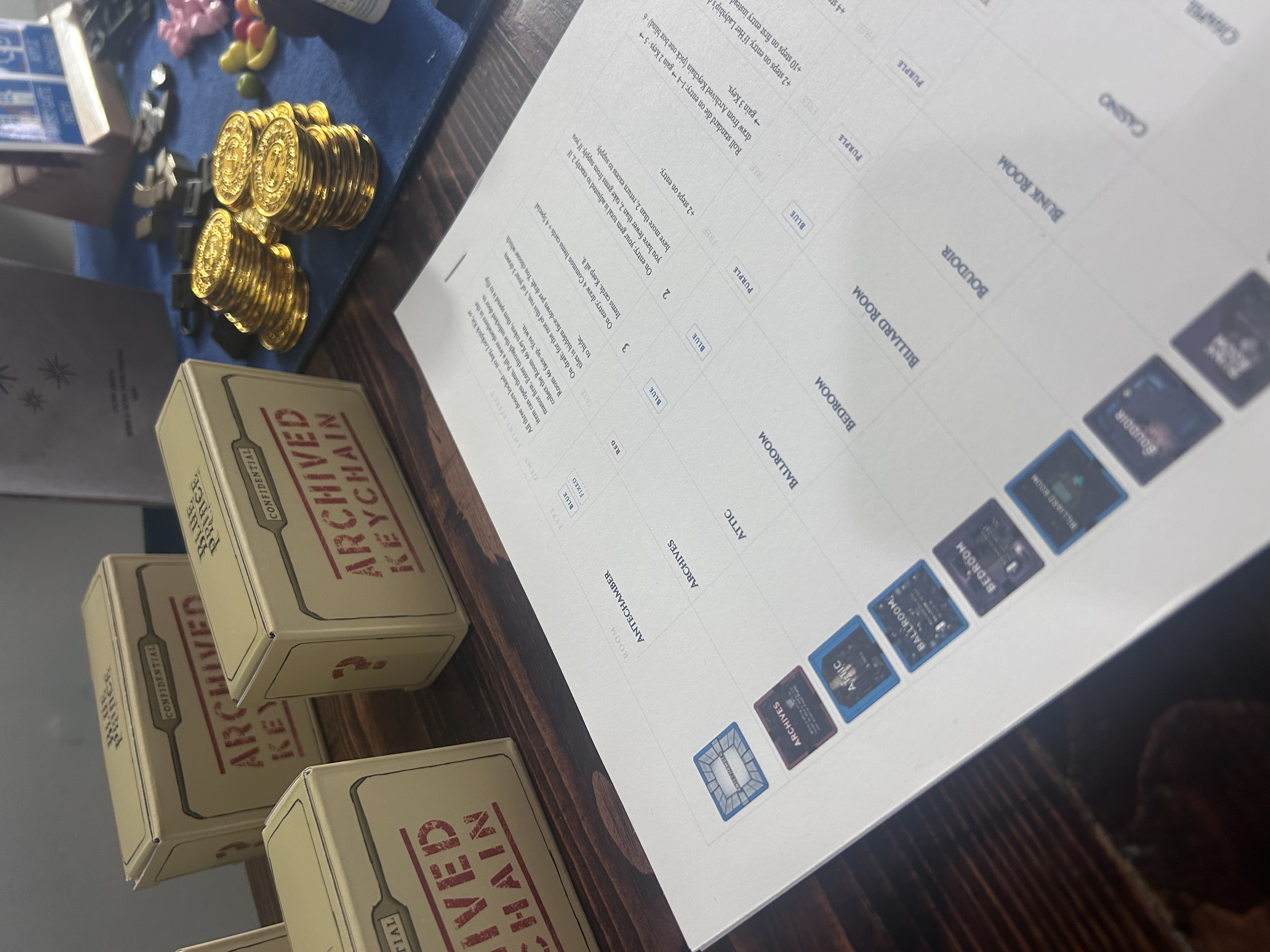
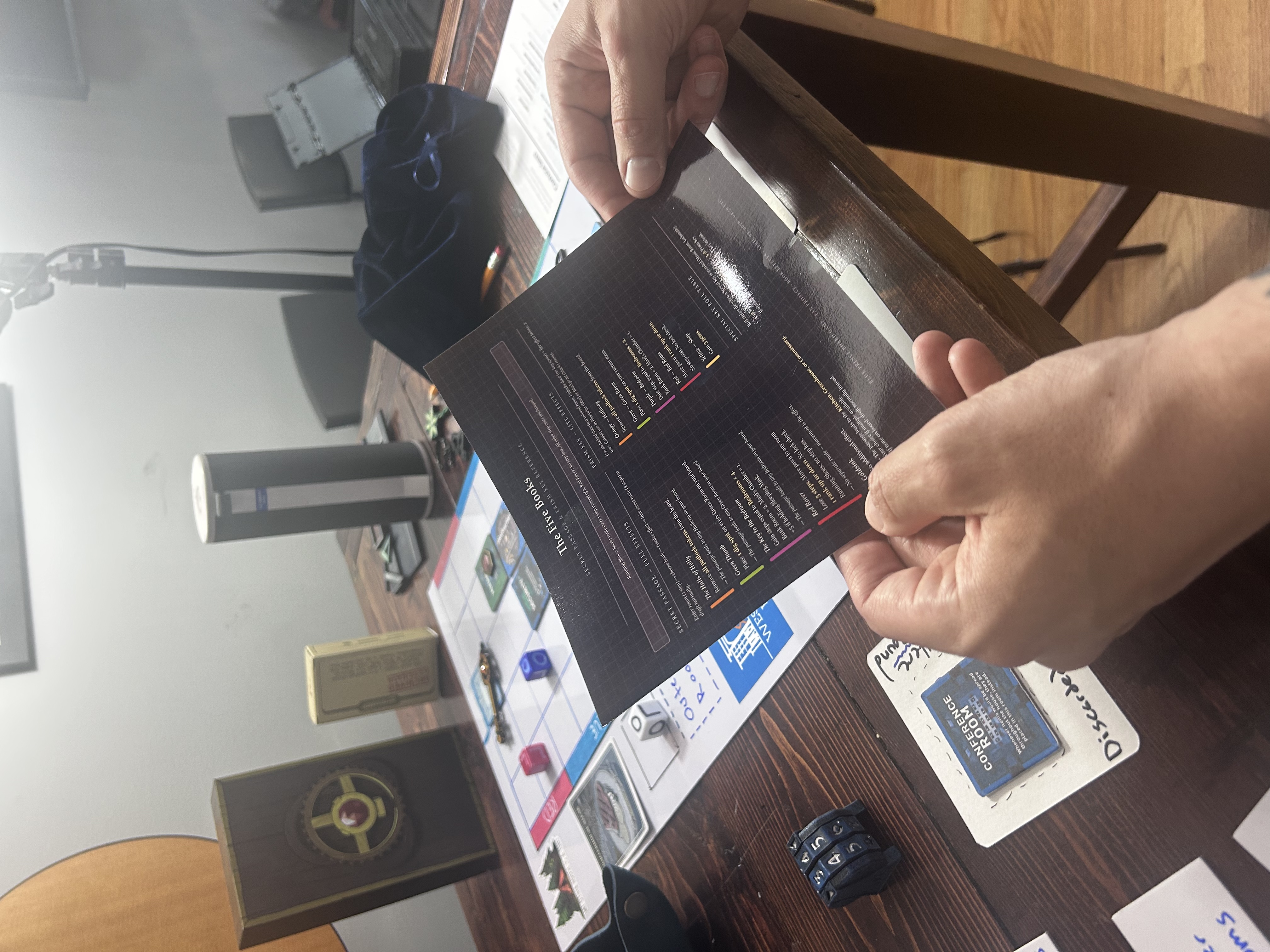
The session was rough in a lot of places. The glossary had missing entries, unclear descriptions, and no indication it was alphabetical. The Darkroom had too much text and unclear blind draw instructions. The Campaign Sheet confused both players. Chris thought steps didn't reset between days. Nobody knew what coins were for until deep into Run 2 — and even then, neither of them had a shop to spend them in.
Two smaller moments worth noting that didn't make it into the written notes. Mike drew the Running Shoes, consumed them immediately, then looked up and asked where the discard pile was. There isn't one — used cards go back to the bottom of the deck — but that was never spelled out. He wanted a designated physical location on the table for used cards. Small thing I hadn't considered, but a real gap.
Chris drafted a room with 2 dirt tokens and asked "does that mean I dig twice?" Obvious to me with all the VG context in my head — not to him. What followed was more telling: he stacked both dirt tokens on top of each other on the tile. That's not confusion about the rule. That's the tile telling him there isn't room for two separate tokens. The room tiles feeling cramped with multiple tokens was a known design issue. This session put a face on it.
Where it worked
Not everything was rough. Some things worked exactly as designed — and a few things landed harder than I expected.
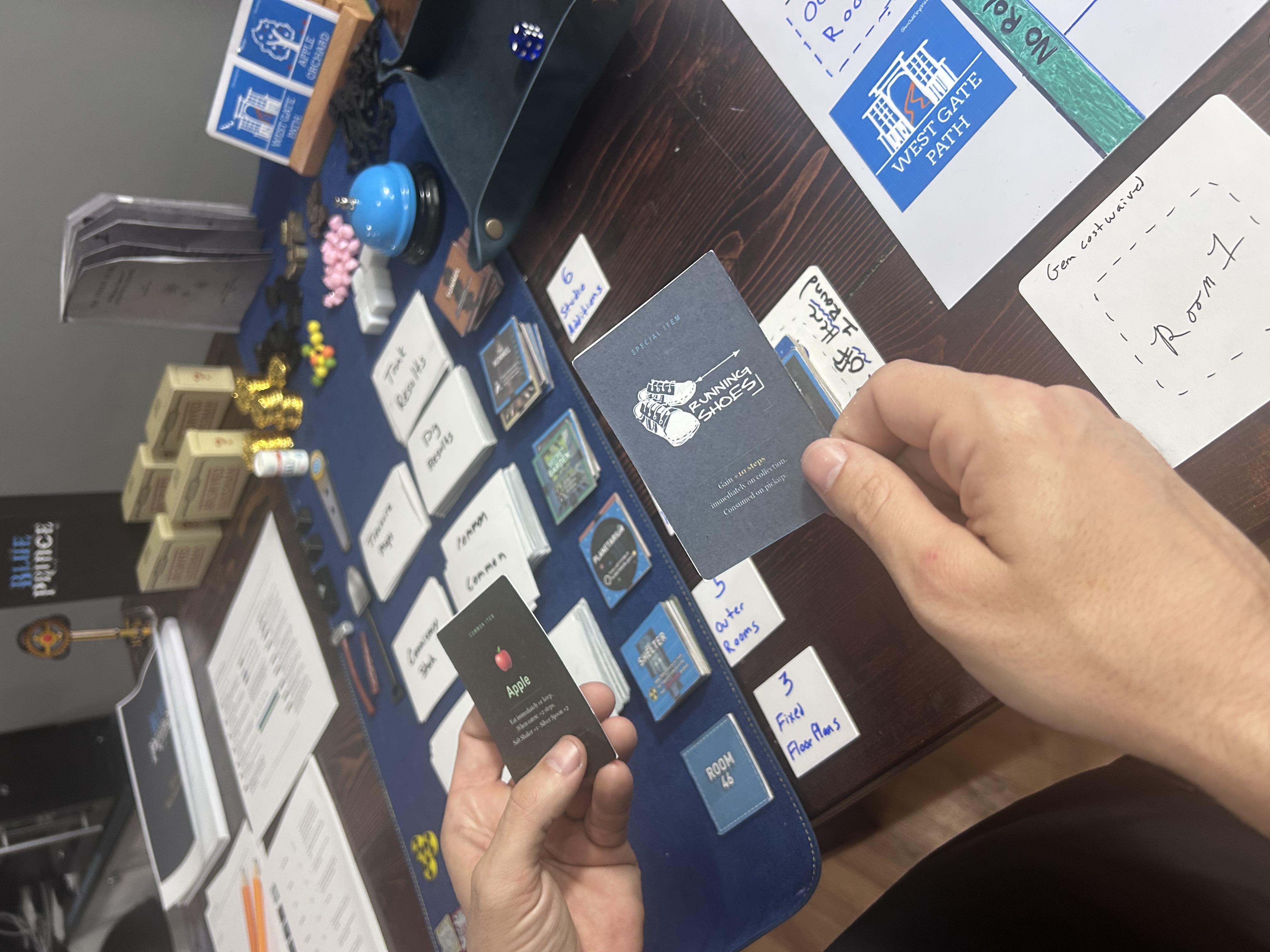
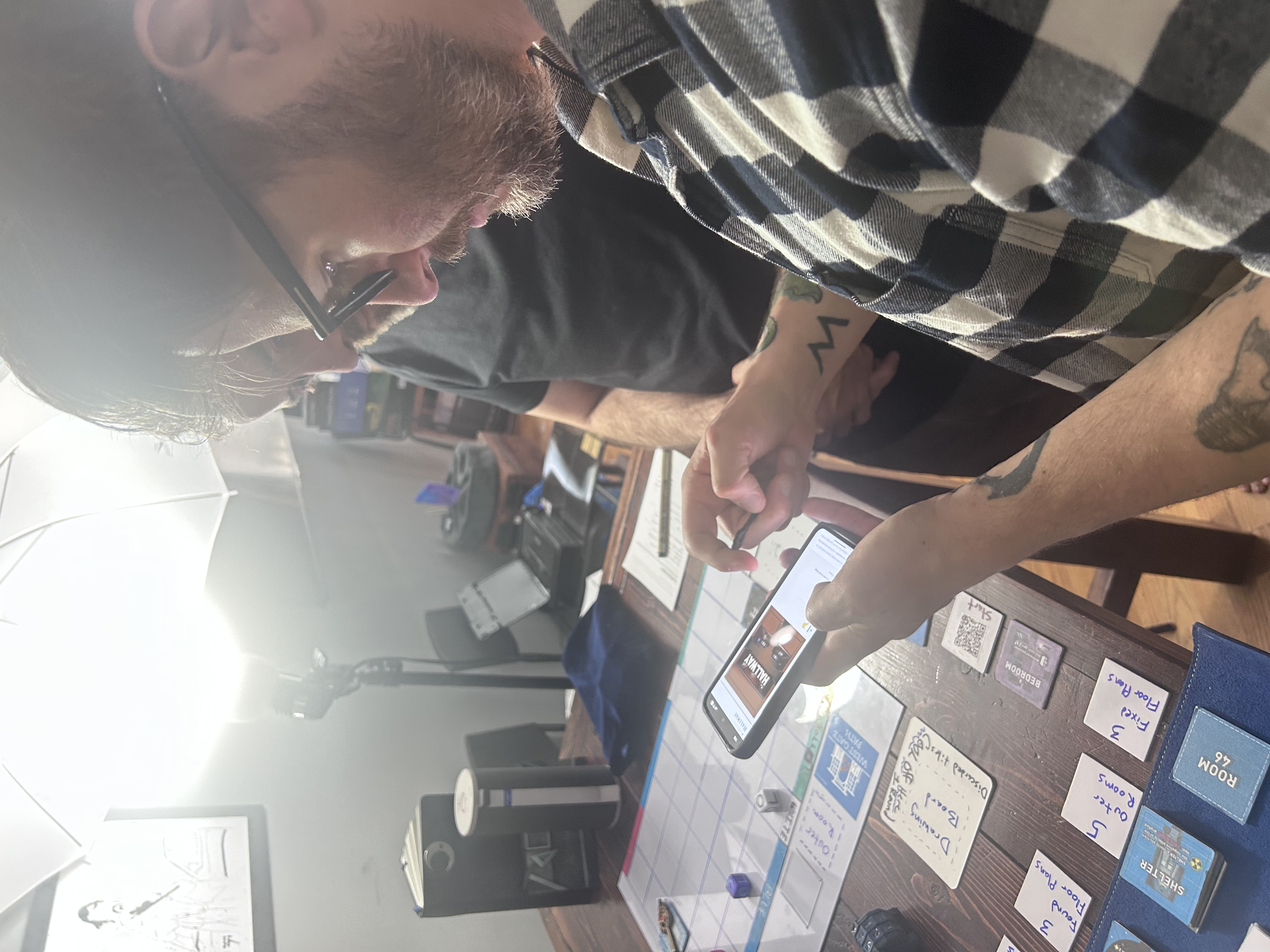
The QR code prototype landed even bigger than expected — and it was Mike's own idea from a previous session, so there was a personal stake in it working. When he flipped a tile over mid-game and scanned it with his phone, the Hallway landing page pulled up immediately. He scrolled through it while the board sat in front of him.
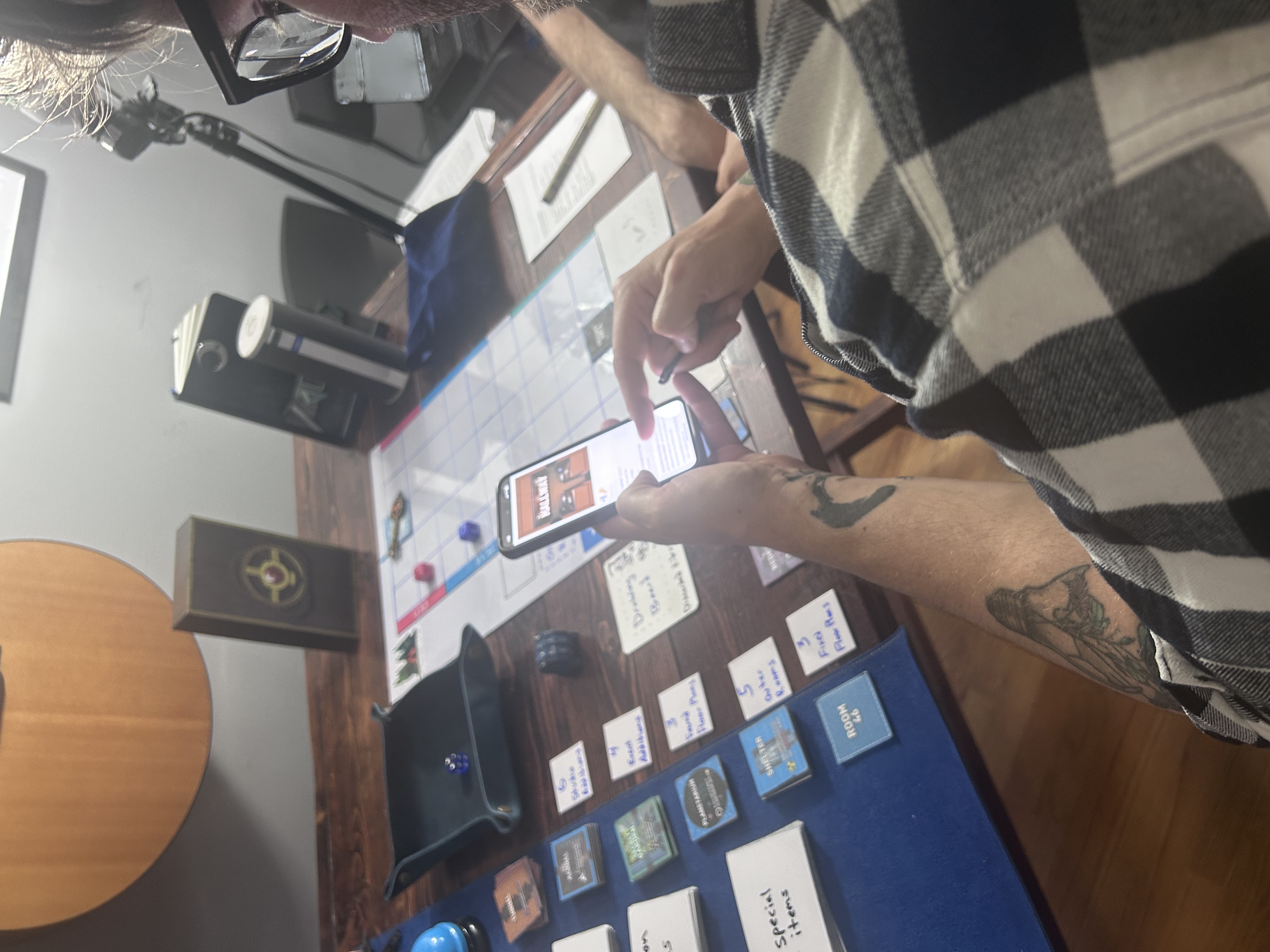
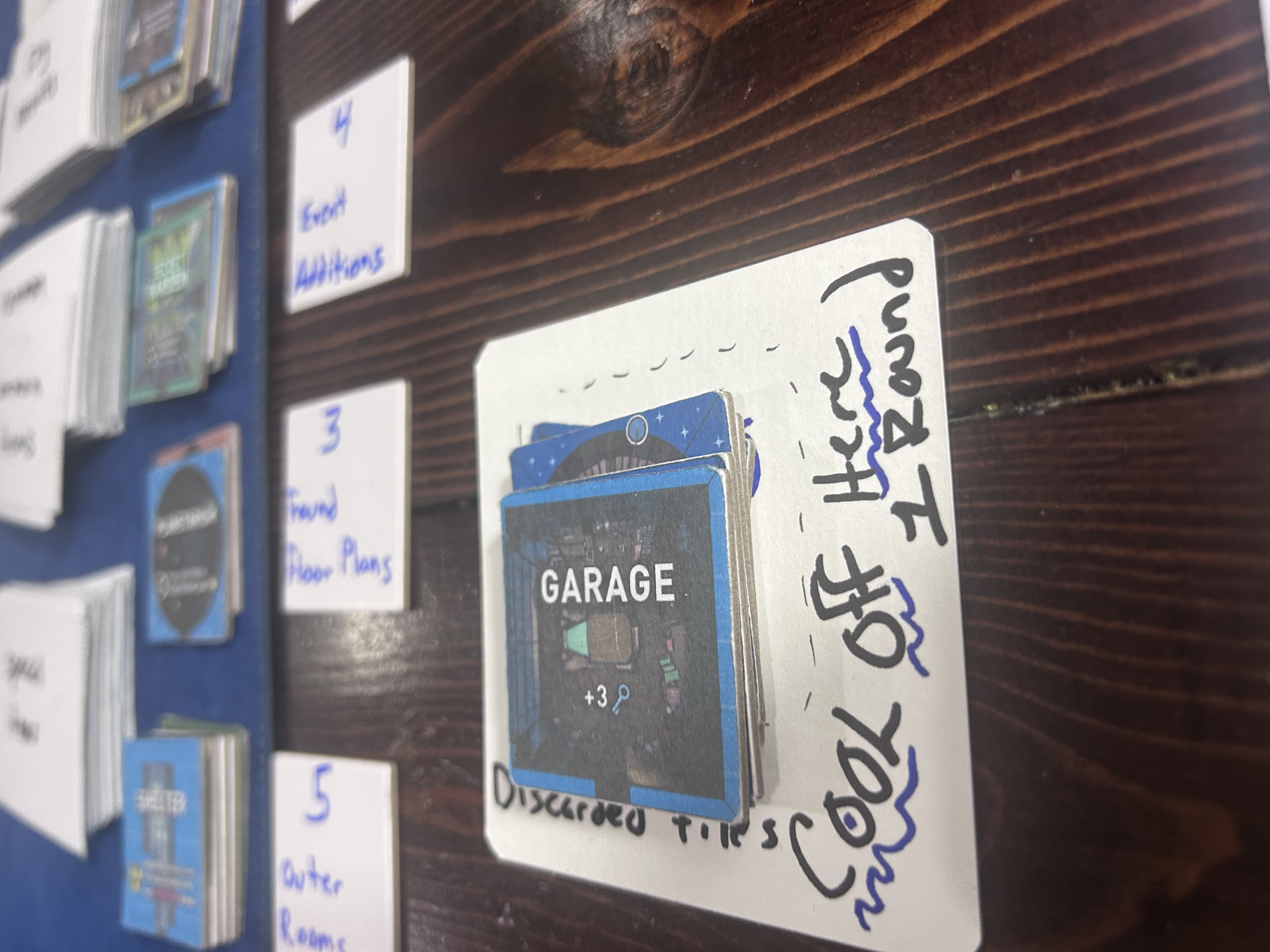
They both stated out loud that they liked to dig. The digging mechanic — dirt tokens, Shovel, Kennel, Closet — created genuine decision tension and they leaned into it every time. The Drawing Board cool-off mechanic worked in practice and was understood immediately once they saw the handwritten label beside the board.
The Observatory and Fixed Stars book also worked cleanly. When Mike found the booklet and started using it at the table, he picked it up without confusion — the physical reference book is the right format for that mechanic. He seemed to genuinely enjoy it.
The surveys
Both rated fun at 4/5 and would play again. NPS of 7 and 8 for a prototype with real rough edges in a three-hour session. I'll take it.
Mike's Q7 is the traverse/explore tension written in plain language by someone who's never heard that term. He felt it. He wrote it down. That's the most direct confirmation I've had that the tension is real and not just a theoretical design concern.
After the session: Chris's dissertation
After the game ended, Chris stayed and talked. What came out was one of the more valuable pieces of design feedback I've received on this project — and it reframed something I'd been circling around without being able to name.
He said he thought about the game the way he'd think about an invitation to a game night. You know you're committing to three or four hours. The question is whether the game earns that commitment. He said this one was close. Not there yet, but close. And then he explained why.
His specific suggestion: small cards findable in certain rooms, some true and some misleading, that hint at things around the estate. A note in the Security Room that says there might be a reason to explore the Secret Garden. A fragment of lore that makes you want to go somewhere you otherwise wouldn't. Exploration rewards disguised as story.
He didn't know it, but he independently described the exact mechanic that exists in the video game — notes scattered through rooms, some accurate, some red herrings, all designed to make you want to go further.
I told him I'd just removed the only lore layer I'd allowed in the game. The Alzara system — card draws, prophecy fragments, a whole mysterious narrative thread — had been cut in the name of simplicity a few posts ago. Chris's feedback is making me reconsider that decision. Not to bring Alzara back in full form, but to bring back the principle of it: a lore layer that also serves as a hint system. Breadcrumbs disguised as story. The Alzara cards might be coming back from their early grave.
The last thing he said, and it's the one I keep coming back to: the video game is exploration. This board game, right now, is traversal. You're moving through a space toward a destination. You're not wandering in search of something. He said: since you can't see what's inside the rooms (like in the VG), you need more information to make exploration feel worth it.
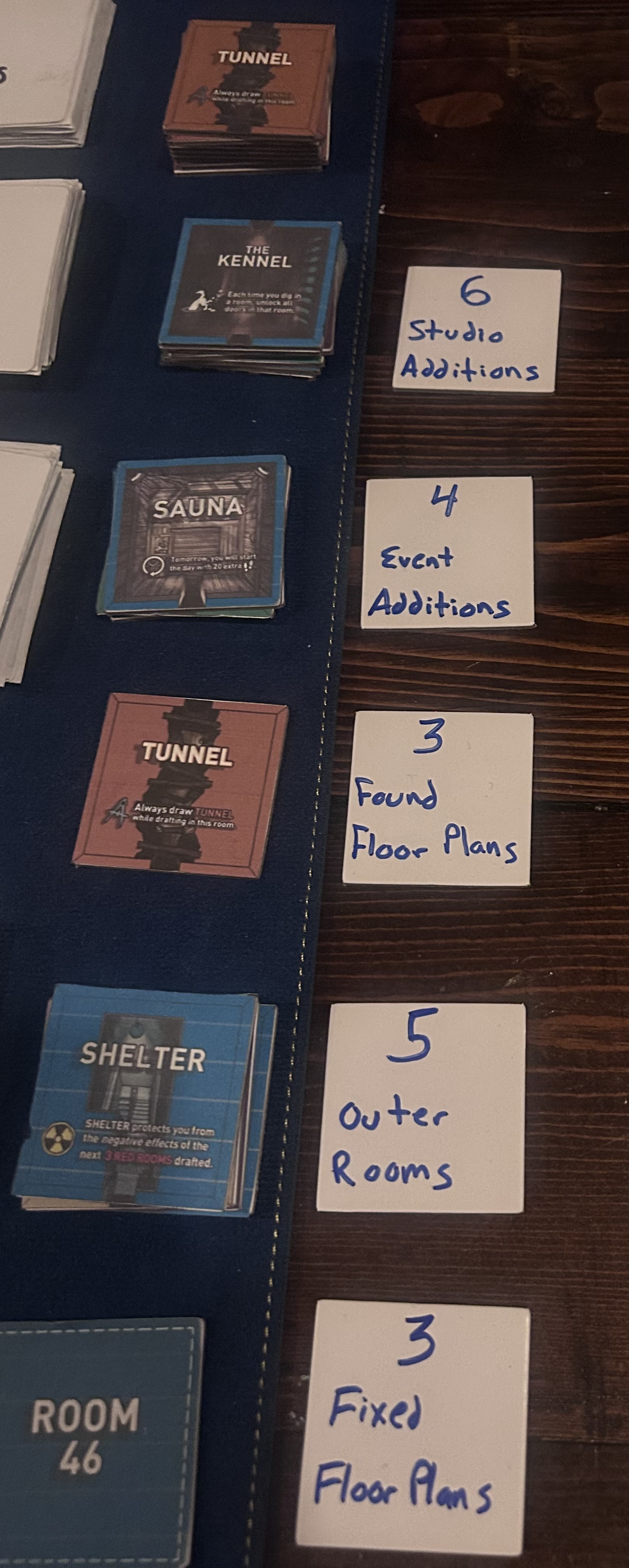
Three full runs. The Studio Additions, the Found Floorplans, the Outer Rooms — all sitting there in plain view, labeled, clearly important, completely unreachable in practice. That's not mystery. That's a broken promise.
What's next
The glossary needs a significant pass — missing entries, unclear descriptions, no navigation aids. The coin economy needs a purpose that players can find before Run 2. The Special Keys need a path to understanding without a designer explaining them. The levers need to be findable. The explore/traverse tension needs a design response.
And somewhere in all of that, a lore layer might be the thing that solves the hardest problem: giving players a reason to want to keep going even when the route to Room 46 isn't clear.
The game works. The bones are solid. Day 3, Antechamber open, one room from the win — on a prototype with handwritten labels and spray-painted tokens. That's real. But it's not ready. Not yet.
Today's session made me realize we are always just exploring or traversing.