When we last spoke with QuietQuotient in April, the Blue Prince board game adaptation was a promising prototype with an unresolved math problem and a cloth bag that had just won an argument with an AI. A month later, three playtest sessions have run their course — including the first co-op session with two external players. The bones held. Other things didn't. We went back to the workshop to find out what the table taught him.
I. What Session 3 Broke
The session ran for more than three hours. Day 3 of the campaign. Two players — one returning, one completely new to the game and the video game both. They reached the Antechamber. One room from the win. By any measure of a prototype, that's a success.
The feedback that came after is what matters here.
After the game ended, one of the players — Chris — stayed and talked. What he said reframed the core design challenge more clearly than anything that had come out of solo playtesting. He said: the video game is exploration. This board game, right now, is traversal. You move through a space toward a destination. You don't wander in search of something. And since you can't see inside rooms before you draft them — unlike the video game, where you open a door and the space reveals itself — you need more information to make exploration feel worth the detour.
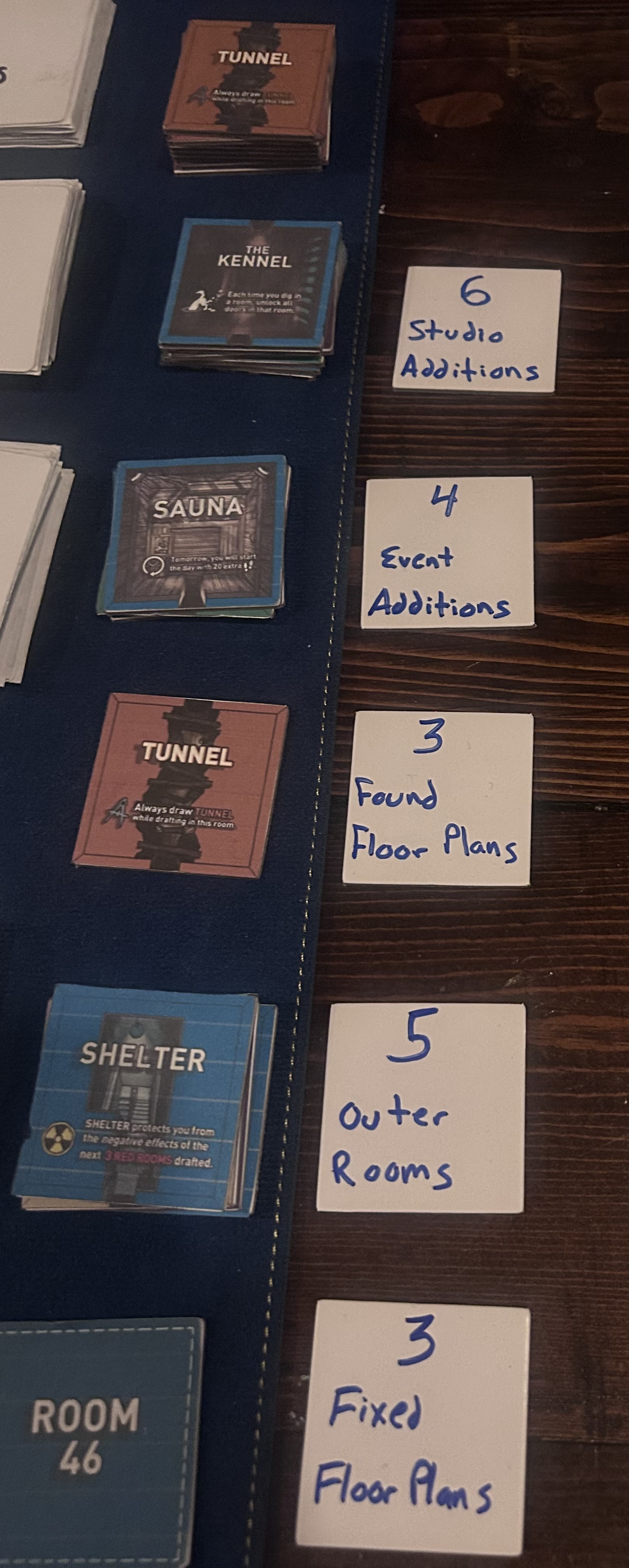
Figure 1.0 — After three full runs: Studio Additions, Event Additions, Found Floor Plans, Outer Rooms — all visible, all labeled, almost none of them reached.
Six Studio Additions. Four Event Additions. Three Found Floor Plans. Five Outer Rooms. All sitting in plain view beside the board — labeled, clearly important, completely unreachable in practice across three full runs. That's not mystery. That's a broken promise.
"I can see all these other rooms sitting beside the board. I have no idea how to get to them. We played three full runs and barely touched any of them."
He didn't know it, but he independently arrived at the same mechanic the video game uses: notes scattered through rooms, some accurate, some red herrings, all designed to make you want to go further. Breadcrumbs disguised as story.
The designer had built exactly that system earlier in development — the Alzara prophecy cards, a lore layer woven through the game's rooms. He cut it in the name of simplicity. Chris's feedback is making that decision look like a mistake. Alzara may return, not in its original form, but as a hint system. The principle of it, at minimum, is coming back.
"The last thing he said, and it's the one I keep coming back to: the video game is exploration. This board game, right now, is traversal."
— QQ, post-session notesII. The Mechanics the Interview Didn't Reach
The April interview covered the origin and the broad strokes. It didn't get into how the physical systems actually work at the table level. Two decisions are worth unpacking in detail — both formalized as a direct result of what playtesting revealed.
The Drawing Board
The bag solved the physics problem of the stack. It introduced a new one: with a smaller tile pool than the video game's, players were drawing back tiles they'd just rejected. Not occasionally — frequently. The same room appearing on consecutive drafts. In a game about discovery, being handed the same options twice in a row feels like the house has given up on you.
When you draft a tile, the 2 unchosen tiles do not return immediately to the Active Bag. Place them face-down on the Drawing Board — a designated spot beside the grid — for one turn. At the start of your next draft, return them to the bag before drawing.
This prevents back-to-back repeat draws. The Drawing Board holds exactly 2 tiles and resets every turn.
Library exception: draws 4 tiles, returns 3 to the Drawing Board. Ivory Die redraws: set-aside tiles follow the same cool-down rule.
The video game doesn't have this problem because Mt. Holly's full room roster is enormous — the sheer number of rooms makes a consecutive repeat statistically unlikely. A physical table can't replicate that scale. The Drawing Board compensates for it: a spatial solution to a numbers problem.
The Die System
One of the quieter but more consequential decisions of the past month was formalizing exactly what each die does — and enforcing that nothing crosses over.
OPEN/LOCKED die: A custom d6, three OPEN faces, three LOCKED faces. Rolled when entering any room that can be locked. Binary result only. Never used for presence checks or selection.
Standard d6: Presence checks (4+ threshold) and selection rolls only. Blue rooms: roll to determine if a trunk is present. Dig spots: same threshold. Nothing else.
Ivory Dice: Not rolled. Held resource tokens. Spend one to redraw your current 3-tile draft. A different kind of luck management — deliberate, not random.
Before this formalization, players would occasionally roll the wrong die for the wrong thing. Each die now has exactly one job. At the table, game language that contradicts itself is the fastest way to lose a player's trust in the system.
III. Open Questions as of Session 3
A design document that doesn't acknowledge what isn't working is a marketing document. Here is the current punch list without softening.
| Problem | Status | Direction |
|---|---|---|
| Traverse vs. explore tension | Open | Lore/hint card system. Possibly resurrects Alzara cards as a breadcrumb layer. |
| Coin economy | Open | Players don't know what to spend coins on early enough. Commissary visibility needs work. |
| Special Key path | Open | How to acquire a Special Key, and when to use it, isn't legible without explanation. |
| Puzzle verification | Open | Gate Code, lever discovery — no physical solution mechanic yet. |
| Tile crowding | Open | Multiple tokens on one tile feels cramped. Component design pass needed. |
| Alzara / lore cards | Open | Removed from base game. Under active reconsideration as a hint system. |
| Drawing Board — cool-down | Locked | 2 unchosen tiles cool off beside the board for one turn. Adopted Session 3. |
| Archived Keychain — blind draw | Locked | Four iam8bit blind boxes, one per Special Key. Player picks blind. Adopted Session 3. |
| Die system — game language | Locked | Three die types, three jobs, no overlap. Formalized Session 3. |
IV. What Three Sessions Have Confirmed
Three sessions have also produced a list of things that definitively work — which matters, because a prototype with nothing confirmed is just a hypothesis.
The bag draft works. The tactile moment of reaching in and pulling three tiles blind is a better experience than the stack ever was. Players lean into it without being told to.
The Archived Keychain works. Four physical iam8bit blind boxes — one for each Special Key — replace what was a two-roll Music Room system. When a player earns a Special Key, they pick a box. They don't know which key is inside until they open it. It is the single strongest physical moment in the prototype. It earned its place in one session and hasn't been questioned since.
The loop works. Day 3, Antechamber open, one room from the win — on a prototype with handwritten tile labels and spray-painted padlock tokens, after three hours with two players who came in cold. Both scored the session 4/5 fun with NPS scores of 7 and 8, and both said they'd play again.
Most importantly: the session produced the one outcome the designer said he was looking for. The players failed. Then immediately started talking about what they'd do differently next time. Not what was wrong with the game. What they'd do differently. That's the curiosity loop closing.
"The game isn't ready. But it's real. There's a difference."
— QQ