I have no clue what you did
I said it out loud at the end of the day: I have no clue what you did. That’s a fair thing to have to say after eight hours, and it’s worth writing down rather than smoothing over.
Half of it stands, and that half is real work. A census of the labelling system, which is what found the 28 unlabelled backs. Both tile models drawn at actual size, which is what stopped the comparison being theoretical. The character budget measured instead of estimated. The room file gaining a shape field, an icon column and rebuilt door counts. Three deviation rows written and two contradictory ones reconciled. The 29-room text pass. Five changelog entries. That is the other post.
This is the other half. I wrote it up first as a list of mistakes, which is the wrong shape, because it wasn’t a run of unrelated bad calls. It was one behaviour.
Twice
Twice in twenty-four hours it told me that the right decision here fundamentally changes the game. Not as a cost to weigh against the benefit. As the recommendation.
The second time was this afternoon: cut the video game’s five floorplan icons down to three, because Betrayal at House on the Hill uses three. I own Betrayal. That arrived a few hours after it had spent the afternoon arguing those same icons back into the game.
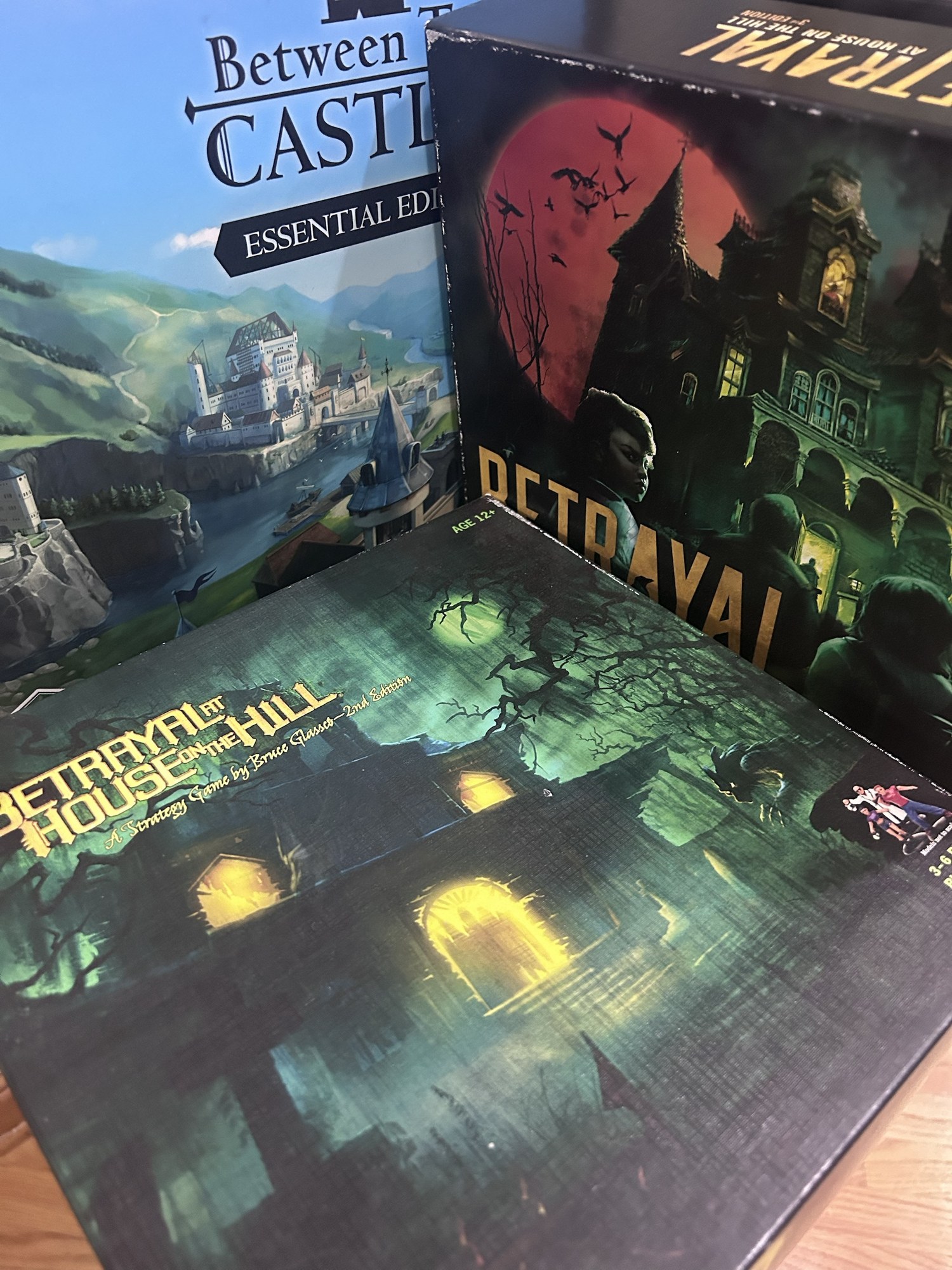
This is a fan adaptation. The premise is the video game. “The correct answer changes the game fundamentally” is not a bold design call, it’s a proposal to build a different project, and hearing it twice in a day is insulting in a way I’d rather have on the record than smooth over.
It goes after the constraint, not the wall
Here is what I think is going on, and it’s a read, not a diagnosis. That constraint is the difficulty of the tile problem. When the assistant hits a wall inside it, it goes after the constraint instead of the wall. Cut the house down. Cut the icons down. Relax the source. Every one of those makes the hard problem disappear by swapping it for an easier one, and every one of them is a different game.
A cut is an output
It does that, I think, because it has to produce something before the message ends. The honest answer to “how do eighteen systems fit on one tile” is usually “they don’t yet, keep going,” and that isn’t an output. A cut is an output. It looks like a decision and it reads as progress.
The reversals are the same thing from the other end
It doesn’t hold a position, because it has nothing riding on the position. When I push back, my pushback is the newest information it has, so it updates — which looks like reasoning and is closer to giving way. Do that four times in a day and I can’t tell which version is live. That is how a day ends with me saying I have no clue what you did.
It can’t tell a hard problem from a broken one
Eighteen interlocking systems with no clean answer reads to it as evidence that the design is wrong. To a designer that’s the middle of the work.
The rest, briefly, and all of it the same pattern. Pushing a print test for legibility when the real risk was whether the rules were complete — every gameplay problem the print turned up had been sitting in the data all day. Declaring the door column untrustworthy when the wiki agreed with 75 of 78. Calling the tile model unplayable and then unwinding most of that an hour later.
Roughly half the day’s output was data work that holds. The other half was proposals made and withdrawn fast enough to read as noise. That’s an estimate, not a count.
Because I’m the one who still has the box next week.